Oral History Collection
Sandra Sarrouf
Interviewed by Noha KolkailahRecorded on July 17, 2026Duration 50:12Language English
[00:00:00] Noha Kolkailah: Hello, my name is Noha Kolkailah. I'm here with the Mawtini Project. Today we are interviewing Sandra Sarrouf. Hi, Sandra.
[00:00:09] Sandra Sarrouf: Hi.
[00:00:10] Noha Kolkailah: Can you please state your name and spell it?
[00:00:13] Sandra Sarrouf: Sandra, S-A-N-D-R-A. Sarrouf, S-A-R-R-O-U-F.
[00:00:20] Noha Kolkailah: Awesome, and do you consent to being recorded today?
[00:00:23] Sandra Sarrouf: Yes.
[00:00:24] Noha Kolkailah: Okay, wonderful. So again, today is July 17th, 2025, and we are interviewing Sandra for the Mawtini Project.
[00:00:34] Noha Kolkailah: I am so excited to interview you, Sandra. We have known each other for so many years and worked together in so many capacities. And so this is kind of the first real opportunity for me to dig into your history with you and your origin of where you were born and your sense of belonging and where that all lays.
[00:00:58] Noha Kolkailah: So let's get right to it. Can you tell us a little bit about where you were born? And you can start from your parents, if that is, you know, good information for us to include. Yeah.
[00:01:11] Sandra Sarrouf: Well, I was born June 29th, 1975 in Beirut, Lebanon. I always tell this story, at the height of the Civil War, my mom and dad say, they used to joke, they took me home, they were at the hospital and they didn't know what to call me, but they would joke that they should call me Rocket because it was hard to get to the hospital and there were bombs being dropped, and gunfire happening during my birth. So it was like, this joke that, you know, my name should be Rocket.
[00:01:48] Noha Kolkailah: I had no idea. Wow.
[00:01:52] Sandra Sarrouf: Yeah, so that's where I was born. It's funny, I just turned fifty and my husband made me this beautiful birthday book with memories and my dad wrote me a very sweet message in the book, and in there he shared, and I know my dad doesn't tell a lot of stories. It's like very hard to get history from him.
[00:02:11] Sandra Sarrouf: But there was a sweet story in what he wrote me, how when I was born, he had to come see me at the hospital, you know, and during the civil War there were, it was just divided in green zones and red zones and like where you had to cross. And so he said, you know, I, he had to do, make the right timing to cross the street to get to the hospital.
[00:02:37] Sandra Sarrouf: Avoiding the, he made some joke out of it in the story in my book, right. To come see me was like avoiding the gunshots. But yeah, so that's, so that's where I was born.
[00:02:50] Noha Kolkailah: Wow. And so I take it your parents were born in the same city?
[00:02:54] Sandra Sarrouf: So my mom actually was born in Tanta, Egypt.
[00:02:57] Noha Kolkailah: Oh.
[00:02:59] Sandra Sarrouf: So she grew up-
[00:02:59] Noha Kolkailah: I think I knew that.
[00:03:00] Sandra Sarrouf: Yeah. Yeah. So she's Egyptian. She grew up in Egypt. My father was also born in Egypt, but he went back to Lebanon when they were young. And my dad, like his generationally we're from Lebanon and Syria, like if you trace it back to my great grandparents.
[00:03:19] Noha Kolkailah: So your mom wasn't born, wasn't Egyptian, but she, she's Lebanese, but born in Egypt.
[00:03:24] Sandra Sarrouf: Well, she's born in Egypt. Yeah. But my grandma was also born in Egypt.
[00:03:28] Noha Kolkailah: Oh, okay.
[00:03:28] Sandra Sarrouf: But my grandma's mom was born in Homs. I think. One of the villages, or towns that starts with an H in Syria. But then they immigrated to Egypt. And then my grandpa, my grandma's husband was also Egyptian. Um, so yeah, so that's, so my mom grew up n Alexandria and Tanta. And then when Nassar became president, they left, they left Egypt to go to Beirut. And so that's how my mom ended up in Beirut.
[00:04:03] Noha Kolkailah: Wow.
[00:04:03] Sandra Sarrouf: And where she met my dad.
[00:04:05] Noha Kolkailah: Okay. So your mom is Egyptian?
[00:04:07] Sandra Sarrouf: Yeah. Okay.
[00:04:09] Noha Kolkailah: Wow.
[00:04:09] Sandra Sarrouf: Culturally, I mean, you see the differences between the Lebanese and the Egyptians, right?
[00:04:13] Noha Kolkailah: For sure. For sure. And have you been to Egypt?
[00:04:16] Sandra Sarrouf: I went to Egypt in 1996 and I haven't been back, which is really sad. But yeah, that was really special, because I went with my cousin, my, my cousins's from Canada, my mom's sister who lives in Toronto. Right, so when the war happened in Beirut, my mom's family just started to disperse, as the war carried on and got longer. So her sister ended up moving to Toronto. Anyways. Right. So I know how to piecemeal all this-
[00:04:53] Noha Kolkailah: It's life right?
[00:04:53] Sandra Sarrouf: Together, right? Yeah, so, so my mom and my sister stayed very close and summers we would try to see each other like the cousins, even though they were in Canada and we were in California.
[00:05:06] Sandra Sarrouf: And so then we went to Egypt in 1996, which was so amazing. It was the first time my mom had been back since, it'd been like twenty years. And I just remember being in the car with her as she was driving. Just like all her memories coming back as we were like seeing the, you know, the towns and the buildings. And so that was amazing. So I got to meet all my cousins and my aunts and my uncles-
[00:05:30] Noha Kolkailah: That's super special.
[00:05:31] Sandra Sarrouf: Those that stayed. Yeah.
[00:05:35] Noha Kolkailah: Wow. So, so then what about your father's side?
[00:05:38] Sandra Sarrouf: So my father's side stayed in Beirut. My dad was the only one that left when the war started after, well, not when it started, but after I was born. He worked for an American company called Allergan, and he was like their, he was in charge of sales or something, and he kept telling them, I can't, I can't work.
[00:06:00] Sandra Sarrouf: Like we can't leave. And he finally said, I'm not staying here anymore. We're leaving. And so he picked up, you know, my mom, my brother, and I. And we left and we left for Egypt and went back to Egypt. I was, I'm a baby, I can't remember any of this.
[00:06:17] Noha Kolkailah: Yeah.
[00:06:18] Sandra Sarrouf: But his family stayed in Beirut and so he has two brothers, two younger brothers, and so I, my first cousins and uncle and that stayed, it's crazy to think, right? It's like they endured not only the civil war, but the constant, right-
[00:06:37] Noha Kolkailah: Yeah, so-
[00:06:38] Sandra Sarrouf: Things that come up.
[00:06:41] Noha Kolkailah: Yeah.
[00:06:41] Sandra Sarrouf: Israel bombs, drops bombs and like just so many...
[00:06:47] Noha Kolkailah: Yeah. So you were born in Beirut? And then tell us about your childhood.
[00:06:54] Sandra Sarrouf: From what I remember, or what I've been told?
[00:06:57] Noha Kolkailah: Both! Put it all together.
[00:06:59] Sandra Sarrouf: So the short version is what I've been told because I was a baby and that we went from Beirut to Egypt, then from Egypt to Greece. We lived in Greece for two years and then from Greece. And my mom loved Greece. She never, she never wanted to leave Egypt. She never wanted to leave Lebanon. But so we were in Greece for two years and then we went to France and that's because my father, we were fortunate in the sense my dad left and he told the company like, I'm leaving. If you want me to work, continue working for you. You have to find something for me. So they kept moving us. So we were fortunate in that sense. We had the safety net of my father's work.
[00:07:40] Noha Kolkailah: Somebody taking care of you? Yeah.
[00:07:41] Sandra Sarrouf: Like moving us. So then after France. We got, he got transferred to Orange County, California.
[00:07:48] Noha Kolkailah: Oh.
[00:07:49] Sandra Sarrouf: And that's how we ended up in California in I think 1979 or 1980.
[00:07:54] Noha Kolkailah: Those are big moves.
[00:07:55] Sandra Sarrouf: Yeah. My mom says, I did not speak, she thought I was mute because she thinks like I was-
[00:08:02] Noha Kolkailah: Traumatized?
[00:08:02] Sandra Sarrouf: Just so many different languages, so many places, like-
[00:08:07] Noha Kolkailah: Nothing to do with the bombs.
[00:08:08] Sandra Sarrouf: I dunno. Probably. I'm sure. You know, parents don't talk about that, so-
[00:08:14] Noha Kolkailah: Yeah. Wow.
[00:08:16] Sandra Sarrouf: So that's how I, so that's how we ended up in California.
[00:08:19] Noha Kolkailah: So up until the time you moved to California, you know the story per your parents' narration. Do you remember any of that?
[00:08:30] Sandra Sarrouf: I have, I think, very vague memories in France, like of being with my brother, like the crib, you know, the room, the bedroom, where we slept.
[00:08:41] Noha Kolkailah: How old were you at that time?
[00:08:43] Sandra Sarrouf: I must have been like three or four.
[00:08:45] Noha Kolkailah: Okay. Still pretty young.
[00:08:46] Sandra Sarrouf: Still pretty young. And my dad traveled a lot. So it was really my mom that was, you know, I always have so much compassion from my mom of how she like had to pop to all these countries and was raising us and had to adapt.
[00:08:59] Sandra Sarrouf: She hated France. She said the French were like so mean to her, so racist. But she, we speak French. Because she went to French school in Egypt, so she knows, she spoke French and Arabic and a little bit of English. And in Lebanon you speak French and Arabic and English. But even so, it just was, and you know, the cult-, like our culture is very warm and-
[00:09:19] Noha Kolkailah: Yeah.
[00:09:20] Sandra Sarrouf: I lost track of that. So, so that's why I have very vague memories. And then coming to California, I have two early memories, when we got here. Like I remember the first house we moved into. Riding a big wheel like down the street or something with my brother.
[00:09:41] Noha Kolkailah: We all remember those big wheels, right, our generation and those big wheels. Yeah, it's definitely a childhood memory.
[00:09:49] Sandra Sarrouf: And then the second house we moved into, because it was, I think the first house was temporary until we found something else, or it got sorted out with my dad's work and then, yeah, I remember walking down the street holding my brother's hand and I didn't understand anything.
[00:10:08] Noha Kolkailah: So here you are. You are now speaking French, Arabic, English-
[00:10:16] Sandra Sarrouf: Well...
[00:10:17] Noha Kolkailah: In California. Maybe by now you're four years old, five years old maybe. What is your first fond memory or just first memory in Orange County that is vivid.
[00:10:31] Sandra Sarrouf: I think it's that time, like when we moved into that house, I remember going to look at that house and there was a big dalmatian in the side yard and I'd never seen a dog like that before. And I remember seeing the house and then realizing that's the house we're gonna move into. I think that's just like a vivid memory. And then holding my brother's hand, walking down the street in the neighborhood, like looking for other kids, but feeling like so uncertain. Just, and not, yeah, I could, I didn't really understand English. Yeah, so I'd say that's one of the earliest memories. I remember my first day of kindergarten, because again, I didn't speak English.
[00:11:21] Noha Kolkailah: How was that experience?
[00:11:23] Sandra Sarrouf: I think I was just very nervous and I was a mama's girl. I was very shy and I always was like underneath my mom's skirt and, you know, so just going away and like leaving my mom for the first time. And, the teacher, of course, kindergarten teachers are angels. Ms. Jocelyn, I remember her and she was asking everybody their addresses and I didn't understand what she was saying. And so she drew a picture of a house. And like she pointed at the numbers and then I was like, oh!
[00:11:59] Noha Kolkailah: And were you able to give her your address at that point?
[00:12:02] Sandra Sarrouf: Yeah, I think my mom had drilled in my address. But yeah, so that's like a really early memory too. And my brother's three years older than me and so it would be interesting to get his story. He doesn't talk, it's hard for him also to talk about memories. But I know because in France you start school a year earlier than you do here. So he started first, well when we came here, I think he jumped into second grade, but he didn't speak any English and he was young. And so, you know, in hind-, I've asked my mom and she said there was a teacher that met with him every day after school to help him like adjust and learn English. I don't know if they even had ESL back then or like what? But yeah.
[00:12:53] Noha Kolkailah: So how was elementary school in Orange County moving beyond kindergarten? Where you probably remembering more and more things? You're picking up English. How was that experience for you given, given the fact that, you know, you go home and you go home to a different culture? Different language probably at home. How, how was that?
[00:13:21] Sandra Sarrouf: I think it just was, you know, I don't much, later in life did I have kind of the literacy or the understanding, like, it was very different. I think I just knew how to adapt.
[00:13:35] Noha Kolkailah: And when did you realize that those were skills you were gaining over time and realizing that, oh, I'm of a different culture than the rest of the people around me.
[00:13:48] Sandra Sarrouf: Yeah. I mean, I think I knew I was of a different culture, but the skills, I don't even think I knew all the code switching that was happening, right, even this language till college or much even after college. Like, you know, my friends would joke about my mom's accent, or my house would always smell like garlic or, you know, we'd eat, drink different food. Like, I remember the first time I ever ate a tortilla or an avocado, it was like mind blowing. Um, so I knew there were differences like that, or, you know, my friends would say funny things like make comments and I'd be like... So...
[00:14:27] Noha Kolkailah: So you were able to make friends?
[00:14:29] Sandra Sarrouf: Yeah, I was able to make friends and, you know, in high school I wanted to be the American kid and like I just adapted to, and I would fight a lot with my mom, right? Because there were just so many cultural differences and I just wanted to follow the same path as all the other kids, and, like to have a sleepover right at a friend's house was such a big deal. I remember the first sleepover I ever had and my mom like dressed, it was a birthday party and I had to beg to go.
[00:14:59] Sandra Sarrouf: This was an elementary school and it's a big deal, right? You don't let your kids sleep over at strangers' houses. I mean, even though she knew the parents and they lived down the street for us. And she'd wanna dress me in this like, really pretty dress. And I'm like, "No, that's not what we wear!" You know, like you just, and she would say like, "I'd always want to send you to school in like nice clothing because in the Middle East, you don't wear like jeans and sneakers and-"
[00:15:26] Noha Kolkailah: Yeah. We're very formal.
[00:15:28] Sandra Sarrouf: Very formal. And so we got, she got over it eventually, like we all adapted, but it was just those little clashes at times. And then, you know, as I got more independent and I was in high school and I wanted to, as my poor mom, I was a rebel.
[00:15:43] Noha Kolkailah: Did your mom have a community that she belonged to and could feel support from?
[00:15:50] Sandra Sarrouf: Yeah, we had, she found some Arab friends. So we have like our family friends that were Egyptian or loving or Syrian. She definitely has found, not a lot. And through elementary school, I think I was the only Arab kid, probably I think until fifth grade when Sal, Salah came. But other than that, I was the only Arab kid.
[00:16:17] Sandra Sarrouf: And I think even in, I mean, I didn't know everybody in middle school or high school, but I don't remember connecting or knowing. I had one Armenian teacher in high school. You know, even Arm-, it's like there's something you just connect with. And I loved him and I talked to him. But yeah, I never thought about it when I was a kid.
[00:16:41] Sandra Sarrouf: And I grew up in a predominantly white, in Orange County. Like now it's just totally different. But it was a predominantly white community. It was few Latinos. I think we had one African American student in our school. So it was very conservative, very white. But when you're a kid you're just like, you're in it, you're not thinking about all these things.
[00:17:02] Noha Kolkailah: Yeah. You don't see things that way. Yeah. Right. And so when did you become aware? Was it in college that you became aware of? I guess, yeah. I mean, there's a progression of awareness. Of something that, like you, you mentioned you were already aware there were cultural differences.
[00:17:34] Sandra Sarrouf: Yeah.
[00:17:36] Noha Kolkailah: And you wanted to be that American girl. And you still are. You're an American woman. You're an American woman with American kids. But you, you still magnetize a little bit toward the Arab culture.
[00:17:54] Sandra Sarrouf: Yeah.
[00:17:55] Noha Kolkailah: So tell us about how that be became about and how you became more involved or more like kind of wanting to connect with your roots.
[00:18:06] Sandra Sarrouf: Yeah. Well, I think the pivotal moment was in college when I stumbled into the Middle East music and dance ensemble, and here were like mostly Americans playing like music and dancing and I'm like, oh my gosh-
[00:18:24] Noha Kolkailah: This is my stuff.
[00:18:25] Sandra Sarrouf: This is what I grew up with. And like people are stoked.
[00:18:30] Noha Kolkailah: How was that feeling?
[00:18:31] Sandra Sarrouf: What's happening?!
[00:18:32] Noha Kolkailah: What did that feel like? All of a sudden-
[00:18:35] Sandra Sarrouf: It was like, just like-
[00:18:37] Noha Kolkailah: Did you feel seen at that moment, or...?
[00:18:39] Sandra Sarrouf: I think so, but I feel like I felt so much of my life was, not that I was ever not proud, and my mom was always very proud, like very clear, like, "This is your heritage. This is where we're from." So there was never any feeling of shame or wanting to hide, but I think so much of my youth was about assimilating and integrating that I didn't like own it.
[00:19:08] Sandra Sarrouf: I just was, but then I just didn't own it as much. It just like was around me. It was me. So then I think when I saw it through this like external lens on a stage of people, like embracing the music and the dance and the culture. It was like, oh yeah, we're pretty cool.
[00:19:30] Noha Kolkailah: I love that. Wow.
[00:19:32] Sandra Sarrouf: You know? So yeah, it was kind of like, oh, this like seen, validated, valued.
[00:19:40] Noha Kolkailah: Valued. That's so interesting that, and so I want your insight kind of reflecting on how the education system maybe did not allow or seek that out of you as you were growing up? I mean, obviously teachers knew you were different. I'm sure, right?
[00:20:07] Sandra Sarrouf: Yeah. I mean, you just talked to my mom, it's very clear. It's a very thick accent.
[00:20:12] Noha Kolkailah: And so did you feel the expectation was to assimilate or was it the pressure from just societal pressures of just wanting to fit in or...?
[00:20:23] Sandra Sarrouf: I think it was just like the water I was swimming in, right? Like you just kind of adapt to what's around and I don't, you know, I don't think I was ever really seen by teachers. If anything, it was through that or sometimes, you know, like on dates, share your culture days. Like I remember in kindergarten we had, we came with like a traditional Lebanese dress and my mom brought food, and...
[00:20:54] Sandra Sarrouf: It's funny on Facebook several years ago, one of my elementary people, not a friend I don't know. But he posted, like, "I remember in kindergarten, that was the first time I ever learned about Lebanon was when you came that day and you shared," right. So it was just like those were the only opportunities or moments, and that was very early on in elementary.
[00:21:20] Sandra Sarrouf: Or teachers might, I don't have any very vivid memories, but yeah, I think there were a couple where it was clear I was different, but I was a good student. I was quiet, I was studious, I was... So you know, in that sense it wasn't...
[00:21:40] Sandra Sarrouf: I do remember, I do remember, during the hostage crisis, a friend of mine told me, like at school, I think they knew I was Lebanese, but then she was like, you people, you guys are all bad people. And I just remember that so vividly. Because I was like, really like, what? And I remember going home and being like, "Mom, are we bad? Why are we, why is she saying this about us?" You know that's what she was hearing on the news. And then I never really felt comfortable going to her house.
[00:22:18] Sandra Sarrouf: And she was like one of my really good friends, but I remember then when going to her house, like I could feel that tension from her parents. It was really weird. But that was few and far between, right, for the most part it was like just friends. I remember my friend Roberto, my one Mexican friend, he informed me that my mom had an accent and I was like, "No, she doesn't have an accent." He's like, "Yeah, your mom has an accent." And I was like, "Oh." Because I didn't even hear, right? I didn't realize it!
[00:22:51] Noha Kolkailah: So those moments. Where they're few and far between, but sometimes they're just enough to make us aware that we are different and that society doesn't see us or think of us in the same way that we see ourselves. But then your college experience proved differently.
[00:23:17] Sandra Sarrouf: Yeah.
[00:23:17] Noha Kolkailah: You found that pride and, so then what did you do with that experience in college where you started to, you know, kind of connect with who you were, your heritage?
[00:23:31] Sandra Sarrouf: Well, I think my first point was through music and dance. So like I started to take a deep dive into the traditional dance practices. Because it was the company that was part... And I grew up dancing, ballet, jazz, and tap, right. And we would do dance at home, at parties and different things, we'd do the Middle Eastern dance, but it was never like this trained technical thing. And I never even thought about it as like a technical dance because I was so in the like ballet, jazz, tap, you know, through the studio.
[00:24:03] Sandra Sarrouf: But I've always loved dancing. So then when I found the Middle East music and dance ensemble, I started to take the dance classes and then that just opened up my mind of like, oh my gosh, there's so much richness and history, and in the music and in the dance. Like I only knew what we did at home. But then to just take a deeper dive into the diversity of the Arab world and the different dance practices and customs and traditions and so that was one of the avenues.
[00:24:35] Noha Kolkailah: And now this has become really your work. And so tell us about the transition, or not the transition, but like, that deep dive that then led to all the different branches of what you do now?
[00:24:48] Sandra Sarrouf: Yeah, and the many hats I wear. I think I've just always been fascinated with culture and maybe it's because of my own obviously upbringing and the fact that, I was from the minority culture in my community and, but I've always been fascinated by the way people participate in culture and different ways culture is expressed.
[00:25:11] Sandra Sarrouf: And, international relations. So I've always had this inclination. I've always been in, not politics, but I've always been fascinated by how communities govern themselves and like how that shows up different in different cultures and communities. And so I studied political science and environmental studies and global peace and security as an undergrad.
[00:25:37] Sandra Sarrouf: In hindsight, like they didn't have this developed yet, but I would've probably benefited from a global studies program or an international. But that kind of didn't exist. Or where I was. So yeah, so then, so my work was always, I'd say it was always like an activist on some level. It started with environmental activism and then over time moved into more social justice, cultural justice in these areas of how are we really supporting our diverse communities.
[00:26:18] Sandra Sarrouf: But I didn't really acknowledge that it was even because of my own experiences till much later, like till graduate school. When I went back to school for my master's in cultural sustainability.
[00:26:34] Noha Kolkailah: So tell me more about that acknowledgement connected to your own experiences. Like you realized it was because of whatever it was that you experienced.
[00:26:47] Sandra Sarrouf: Yeah. How immigrant communities sustain and adapt, sustain their own cultural practices and traditions. What's kept, what's lost when adapting and integrating into new societies where they're minority cultures. And so it just, it was a lot of reflection for me, right. Because I watched my mom and while I grew up, yeah, I mean, I started kindergarten here. I was able to adapt. I knew how to code switch. Like I knew, I knew what it was to be bicultural without even explicitly like, it's just so implicit for me. Right. But then through my graduate work and just life and, and working, being able to like reflect back on how my mom really like as an immigrant. And, you know, my parents divorced when they came here. I was maybe six years old. And so it really was my mom who raised me, by herself in a foreign country. You know.
[00:27:52] Noha Kolkailah: I didn't realize that. So coming to Orange County, it was. Just you and your mom?
[00:27:56] Sandra Sarrouf: Well, it was, no, it was all of us. But they divorced after.
[00:27:58] Noha Kolkailah: They divorced later. Okay.
[00:28:02] Sandra Sarrouf: So that was just, so there was a lot of like reflection in hindsight of like, gosh, how hard must that have been? You know? And she didn't have her community.
[00:28:15] Noha Kolkailah: Yeah. So then from Orange County, how did you get to San Luis?
[00:28:20] Sandra Sarrouf: So, I went to UC Santa Barbara, and then I, after I graduated, I got a job at Eco SLO, the Environmental Center of San Luis Obispo, because I was an environmental activist still, but I was working with farm worker communities on social justice issues and pesticide safety, and so I managed this environmental health program for San Luis Obispo County through this organization, and that's how, that's why I moved up here. Super random. I didn't even know anything about San Luis Obispo, and I got this job and so that's why I came here.
[00:29:01] Noha Kolkailah: And what, where did you meet your husband?
[00:29:04] Sandra Sarrouf: At West African drum and dance class.
[00:29:07] Noha Kolkailah: In San Luis Obispo.
[00:29:08] Sandra Sarrouf: In San, and that's why I'm still here.
[00:29:10] Noha Kolkailah: What year? What year did you--"That's why I'm still here."--What year did you move from Orange County? Well, no, from UCSB to San Luis Obispo. And then what year did you get married?
[00:29:22] Sandra Sarrouf: I moved here in the fall of '99 and I got married in 2005. Okay. Yeah, I don't think I would've stayed.
[00:29:32] Noha Kolkailah: Tell us why.
[00:29:35] Sandra Sarrouf: It's just like a hard town to meet people, connect. It's very small. I just like couldn't find like really my people. It just felt, you know, and I think as you're a young adult or young professional, a lot of people I worked with were much older than me, a lot of, you know, older white dudes and like, it just, it was just-
[00:30:02] Noha Kolkailah: So, describe the perfect community that you would have wanted to find in San Luis.
[00:30:07] Sandra Sarrouf: I don't know. I mean, I love the outdoors here. There's like things I love about this area, but as far as, I don't know, just people that were just felt more connected and close and, you know, I just didn't, it was hard for me to find community, like however you define like, and friends that you could just call or hang out with, or that there were similarities. Again, like I didn't know any other Middle Eastern people. Not that that's what I was always looking for, but you know, that's one commonality or. I did through the dance class, I did meet one friend, which was great.
[00:30:49] Noha Kolkailah: This was back in 2005.
[00:30:50] Sandra Sarrouf: This was back in 2000, like just yeah, it was just a harder town, so. I wasn't a partier. You know, so...
[00:31:04] Noha Kolkailah: And so have things evolved since then? Do you still feel the same way or...?
[00:31:09] Sandra Sarrouf: I think it goes up and down. I feel now I have much more community. Right. And then getting married and having kids and developing a community through my kids has been really helpful when they were young.
[00:31:23] Noha Kolkailah: And what does that-
[00:31:24] Sandra Sarrouf: Meeting you, right, meeting my friends that, like we have deep, deep, common, commonalities with. Just with our hearts and our minds and our activism and just who we are as people. That's been amazing. Yeah, so it, you know, but sometimes it's like, I'm not American enough or I'm not Arabic enough. I often feel like I'm in that in between space.
[00:31:54] Noha Kolkailah: For sure.
[00:31:56] Sandra Sarrouf: I don't speak Arabic. I speak very little. I could love you or curse you. Because when we came here, my mom just kept the French right. She was like, well, learning English and adapt, trying to simulate. So that's one of her biggest regrets, she said. And like, I'm the only one in my family, my brother and I that don't speak Arabic. But yeah, so it's like those, it's like that, I live a lot in those in between spaces.
[00:32:23] Noha Kolkailah: What was the language you spoke at home with your mom and what is the language you speak now at home?
[00:32:29] Sandra Sarrouf: French.
[00:32:30] Noha Kolkailah: French.
[00:32:31] Sandra Sarrouf: I also speak French with my mom, or English.
[00:32:33] Noha Kolkailah: Wow.
[00:32:34] Sandra Sarrouf: Because she kept the French with us. She thought that would be more universal, more helpful. And we're, I know, and we're Christian, you know, we Christian family, so.
[00:32:50] Noha Kolkailah: And so now, tell us about your family and your life in SLO now. What do you speak at home and-
[00:33:02] Sandra Sarrouf: English.
[00:33:02] Noha Kolkailah: How is raising--English--and how is raising kids in San Luis Obispo? I know you connected through, connected with community through your kids. Tell us a little bit about that. Is it the community you would've wanted when you moved here and first married? Just reflect on some of those dynamics a little bit.
[00:33:27] Sandra Sarrouf: Yeah, I think, I would say there's maybe two or three who are good friends that I made through my kids, but sometimes I long for that community where you just like can go over to someone's house, right. It just feels different. You just show up and have tea cookies.
[00:33:52] Noha Kolkailah: You can show up to my house anytime. I just wanna put that out there. The problem is we're so far away from each other.
[00:34:03] Sandra Sarrouf: I know. But yeah, when they were younger it was much easier because you'd have play dates and we were always, I was always constantly trying to organize things. What was your question? Community, finding community.
[00:34:20] Noha Kolkailah: Yeah. And, and do you find community. Community through your activism?
[00:34:23] Sandra Sarrouf: Yeah, I feel like that's mostly where I've found, also found community, right? I have kind of my community through activism, a little bit through dance, a little bit through my kids. So there's these different pockets maybe, that we all walk in.
[00:34:37] Noha Kolkailah: Well, as far as assimilation goes, do you feel your kids, how does their struggle or maybe, maybe there isn't a struggle in the same way as you experienced growing up. Do they still get comments?
[00:35:00] Sandra Sarrouf: Yeah.
[00:35:01] Noha Kolkailah: How does it compare?
[00:35:01] Sandra Sarrouf: Yeah, I know. I wish I had spoken French. I speak Spanish now too, because my dad and brother ended up moving to Spain. But, I wish I would have spoken French or Spanish to them. But now my most comfortable language is English and my husband only speaks English. So, my bad, I didn't.
[00:35:21] Sandra Sarrouf: And I try to keep some of this, like some of the cultural norms and values at home, right obviously some of the food. But some of the ways we, like, we greet, we respect elders like we, responsibility, like the way we treat adults. So I try to keep some of that. Sometimes there's tension between [inaudible, laughs].
[00:35:44] Sandra Sarrouf: But yeah, they're, they're American girls for the most part, I think. But I can see how sometimes they struggle because they know like kind of what my expectations or hopes are and what they're being pulled at from their friends. And so I feel like they do a pretty good job of finding that middle zone. And my older one has been much more curious and connected to her Arab identity. And owning it and wanting to connect and like proud of it, where my younger one's a little, I think less, maybe feeling a little bit, just not sure how to own it. So yeah, I see how they navigate a little bit of both. But of course I've also adopted some much more American ways too. So it's easier than the-
[00:36:50] Noha Kolkailah: Like you can see it and understand it, and so you're able to maybe navigate it in a more understanding or empathetic way.
[00:36:58] Sandra Sarrouf: Yeah. Where it was much more challenging for my mom than me. But yeah, I think they're both proud. [Redacted] is more curious and she like, leans to it more and wants to travel and wants to connect and even wants to study international studies. But yeah you asked if like one time [redacted] like when she shared that she's Arab, the comment was like, "Oh, are you a terrorist?" Or, you know, stupid comments.
[00:37:28] Noha Kolkailah: How did that make her feel and what did you do?
[00:37:30] Sandra Sarrouf: You know, she says it wasn't a big deal, but it, she came home and she was a little upset. She like had to talk to me about it. And like, process. And it was just a great lesson and like, well, yeah, that's a microaggression and that's racism. And that's because people don't know and all they see on the media. Right. And that's where I talk about the beauty and the richness and, right? How we're proud of who we are and there's so much more, right?
[00:37:57] Sandra Sarrouf: So, but they got nothing in school except for what I brought in as a volunteer, like I would go in into classes and I would try to read books and teachers would always welcome me, but other than what they get at home, like they don't get anything.
[00:38:14] Sandra Sarrouf: They, well now in history, they learn about Islam, Judaism, Christianity, but still that's just religion, right? They don't get in much else. And with everything going, you know, with the current conflict, my daughter [redacted] has been very curious and wanting to learn and right, knows how our family stands and has just learned the history and the injustice and she's wanted to bring it up in the classroom.
[00:38:40] Sandra Sarrouf: And she was a senior last year, so she was able to like have some pretty good discussions in her civics class. But in other classes, like she was wearing the watermelon sweatshirt and her teacher kept, like, each time she'd wear it, her teacher would say, "Oh, that's a cute sweatshirt. Oh, that's a cute..." And finally [ redacted] was like, "Oh, do you know what it means?" Because it was the watermelon in the shape of Palestine, and so [ redacted] proceeded to tell her, and the teacher was like, "Oh."
[00:39:09] Noha Kolkailah: All of a sudden it's not cute anymore.
[00:39:11] Sandra Sarrouf: I don't know. And she did an art project where she drew like a woman with the hijab and it said, "Resist" on it. And they had the Palestinian flag colors behind it and her teacher didn't know about it, and so she explained it to her teacher, right? So even in like current context, where's the... And their father's Jewish, like I married a Jewish man and so there's been some very important conversations that both my husband and I have had to have, especially at the beginning, although, you know, from before we married there was, it was very clear, right? This is how I stand and how I feel, and he knew it and he's on board and he also believes in the freedom of Palestinian people. So...
[00:39:56] Noha Kolkailah: I love that he's on board.
[00:39:58] Sandra Sarrouf: Any human being-
[00:39:59] Noha Kolkailah: Any human being...
[00:40:00] Sandra Sarrouf: Would be on board, right? But when you're so, there are people in his family, right, where I've had to have hard conversations with that are so connected to this idea that Israel is the only safe place, but at what expense. Right. And when that is so indoctrinated in your mind to actually try to separate that, right, is this entire identity crisis, which we're seeing. But so we've had those conversations.
[00:40:32] Sandra Sarrouf: But yeah, so then she owns that identity too, right? And even with her Arab friends, they're like, oh, you're okay, you're okay. Because fortunately, she's had Egyptian friends, biracial friends, white friends, like [ redacted] had a much more, even though it's still very not diverse at Morro Bay High, but she's had like very diverse friends. Where my younger one has not had as much diverse friends, and I see the difference.
[00:40:56] Noha Kolkailah: Wow.
[00:40:58] Sandra Sarrouf: I don't know how I got on that tangent, but...
[00:41:00] Noha Kolkailah: It's not a tangent. It's perfect. Yeah, that's very fascinating actually.
[00:41:05] Sandra Sarrouf: Yeah. But other than what we do for Arab American Heritage Month or what I do at home, like they get nothing, even in this town. You know, like to get Arab American Heritage Month recognized, right? It's the only month that's not, that the city council doesn't recognize, that Cal Poly doesn't recognize. Like it takes just community members trying to say, "Hey. We're here, we're people. This month exists. Like we're part of your community."
[00:41:37] Sandra Sarrouf: People say, "Yes, yes, we wanna know!" Right? There's always that beautiful intention to wanna learn and wanna connect, but it stays so surface. Right? And you wanna move beyond the food and beyond, like, yes, the food, the music, the dance, but let's move beyond that too and actually get to know the people and the history and the authors and, right? The medicine. And just the way we live, not only here, but over there, right? Because to expand people's views and stereotypes. So...
[00:42:09] Noha Kolkailah: Absolutely. So given all your experiences and your contributions, out of all the places you've lived, where would you say you feel a sense of belonging, if any?
[00:42:27] Sandra Sarrouf: I think it has to do with the people I'm around. I don't think it has to do with a place. Like I don't feel like I've ever felt like a place. I think it really is connected to my family and to the people I'm around.
[00:42:45] Noha Kolkailah: That's very insightful.
[00:42:47] Sandra Sarrouf: And maybe that's because it's like I'm not, my homeland is, you know, but so yeah, for me home or a sense of belonging has always been the people. That's part of being an immigrant.
[00:43:05] Noha Kolkailah: Yeah. That's a good way to put it, in my opinion. I've never really thought of it that way. I've never really been asked that. But I feel like I would have a similar answer. Yeah. Like who I'm around.
[00:43:22] Sandra Sarrouf: Yeah. Because like, there's one thing to be connect, deeply connected to land, but because I don't think I have that. I mean, this is the place I've lived the longest in my life, but do I have a deep connection to the soil and to the ground and to the earth? I mean, I do in the sense of like, Earth is home but not to the physicality of the place. Maybe more so a little bit more over time. Maybe that's what my children will feel because they were born here.
[00:43:55] Noha Kolkailah: So if you were to go back to Lebanon.
[00:43:58] Sandra Sarrouf: I don't know if I would feel that either be cause I haven't been there for...
[00:44:01] Noha Kolkailah: For a long time.
[00:44:02] Sandra Sarrouf: For a long, long time.
[00:44:03] Noha Kolkailah: If you were to go to Egypt, when you were in Egypt in 1996? Did you feel a sense of belonging at all?
[00:44:10] Sandra Sarrouf: I mean, again, with my family. With my family.
[00:44:14] Noha Kolkailah: Or was it just with, yeah, just the people.
[00:44:15] Sandra Sarrouf: But because I don't speak the language.
[00:44:17] Noha Kolkailah: Right, right, right.
[00:44:18] Sandra Sarrouf: You know, I mean, they know I'm, it's very clear I'm American.
[00:44:23] Noha Kolkailah: Right.
[00:44:23] Sandra Sarrouf: Right? I'm not, I'm not Arab enough. I'm not Leban-, but although my cousins say, "Oh, you're more Lebanese than we are." Because I love the music, right? I want to, I so much wanna embody the culture. But yeah, so it's, again, it's like, where do we belong when we feel like deeply connected to our community and our people?
[00:44:48] Noha Kolkailah: Well.
[00:44:48] Sandra Sarrouf: What else?
[00:44:50] Noha Kolkailah: So thank you so much, Sandra. I would love for you to think about, possible deeper conversations in certain areas that maybe you wanna expand on. And then if you feel like we need a part two.
[00:45:06] Sandra Sarrouf: Okay
[00:45:07] Noha Kolkailah: Then we could do it. If you feel like there's anything else you want to say right now with a couple minutes that we have left.
[00:45:17] Sandra Sarrouf: I mean, I think, yeah, I don't know, I think the part I would expand on would be San Luis, but I don't know what more would be to say. Like I still feel like my Arabness is not really seen or validated even with friends. Like it some, for some people, like it's curious, but a little uncomfortable. Sometimes, you know?
[00:45:39] Noha Kolkailah: And those friends are also Arab or are they non-Arab?
[00:45:43] Sandra Sarrouf: No, no. Non-Arab.
[00:45:43] Noha Kolkailah: Non-Arab. Yeah. They don't see the Arabness in you.
[00:45:47] Sandra Sarrouf: Yeah, which is, I remember one time I was just wearing a scarf over my head because I was cold, and a friend said to me, "Oh, you look so Middle Eastern."
[00:45:56] Noha Kolkailah: That's hilarious.
[00:45:57] Sandra Sarrouf: And I thought...
[00:45:58] Noha Kolkailah: What'd you tell her?
[00:46:00] Sandra Sarrouf: I was kind of shocked. Right in the moment, so I didn't say anything. I was just like, oh. Then I'm like, "Well, I am."
[00:46:07] Noha Kolkailah: Did you tell her, I am?
[00:46:09] Sandra Sarrouf: No! You know when you're like, taken off guard? I was like, you know who I am.
[00:46:18] Noha Kolkailah: That's funny.
[00:46:19] Sandra Sarrouf: Right?
[00:46:20] Noha Kolkailah: Yeah. Yeah.
[00:46:21] Sandra Sarrouf: So it's just...
[00:46:23] Sandra Sarrouf: Yeah.
[00:46:25] Noha Kolkailah: Anyways, yeah, hopefully, you know, there's all the best of intentions in the town, but, with time and continued support...
[00:46:32] Sandra Sarrouf: We have a long ways to go, I think.
[00:46:34] Noha Kolkailah: Yeah. We have a long ways to go just to really embody that true sense of support and inclusion. Of being valued and visible and seen. But, you know, I can't complain. It's a beautiful place, right, we're healthy. But yeah, there's always, there just needs to be more, more action than words. That's always...
[00:47:06] Sandra Sarrouf: Yeah. And I think sometimes, maybe just to empathize a little bit. Towns are victim of the different forces applied on it. So if there is heavy influence in any particular area on the governing entities of a town or of a state or of a country, we can really feel that. It's not a justification or an excuse, but it's something for us to kind of keep in mind as we work towards demanding inclusion and demanding a better sense of belonging for us.
[00:47:56] Noha Kolkailah: Yeah. As we contribute and we're members of society.
[00:48:00] Sandra Sarrouf: Yeah. And through an intersectional approach too, you know? I mean, I think what's really, like I've never felt more fear, excluded since what's been happening in Gaza.
[00:48:11] Noha Kolkailah: Yes, same.
[00:48:12] Sandra Sarrouf: Because it's like, it's so clear everybody's for social justice and then all of a sudden it's like, oh no, we're not. And we're not willing to like support you-
[00:48:25] Noha Kolkailah: The claim is put to the test, right?
[00:48:27] Sandra Sarrouf: Yeah. Yeah. And I think that has felt so heartbreaking, especially with, like, as an activist in the community. Right, we're like, you really don't value us. Now it's shifting [inaudible] but yeah-
[00:48:49] Noha Kolkailah: Slowly, hopefully.
[00:48:50] Sandra Sarrouf: I think that was really, you know, with everything that happened at Cal Poly and in the community, it's really felt like wow, we just want to be put under the rug.
[00:49:06] Noha Kolkailah: It's really unfortunate. Yeah. Yeah. Because we've been working towards, you know, this sense of community for so many years and then all of a sudden, like the door shut.
[00:49:18] Sandra Sarrouf: Yeah. So it's starting to be opened a little bit at what cost, right? At the cost of a genocide, and the cost of thousands and thousands and thousands of our people being slaughtered. And still...
[00:49:31] Noha Kolkailah: Right, right. And still...
[00:49:33] Sandra Sarrouf: At a policy level, right?
[00:49:35] Noha Kolkailah: Right.
[00:49:36] Sandra Sarrouf: I think the masses are there. Anyways, so yeah. So that's just, it's been very eye-opening when it's been so blatant. In the past year. That's why we do what we do.
[00:49:50] Noha Kolkailah: Yes, absolutely. Well, thank you again so much. This has been really insightful. I've learned so much from you and about you and excited that this interview is included in our oral history library.
[00:50:04] Sandra Sarrouf: Thanks for having me, thank for interviewing me.
[00:50:09] Noha Kolkailah: Thank you.

About this Interview
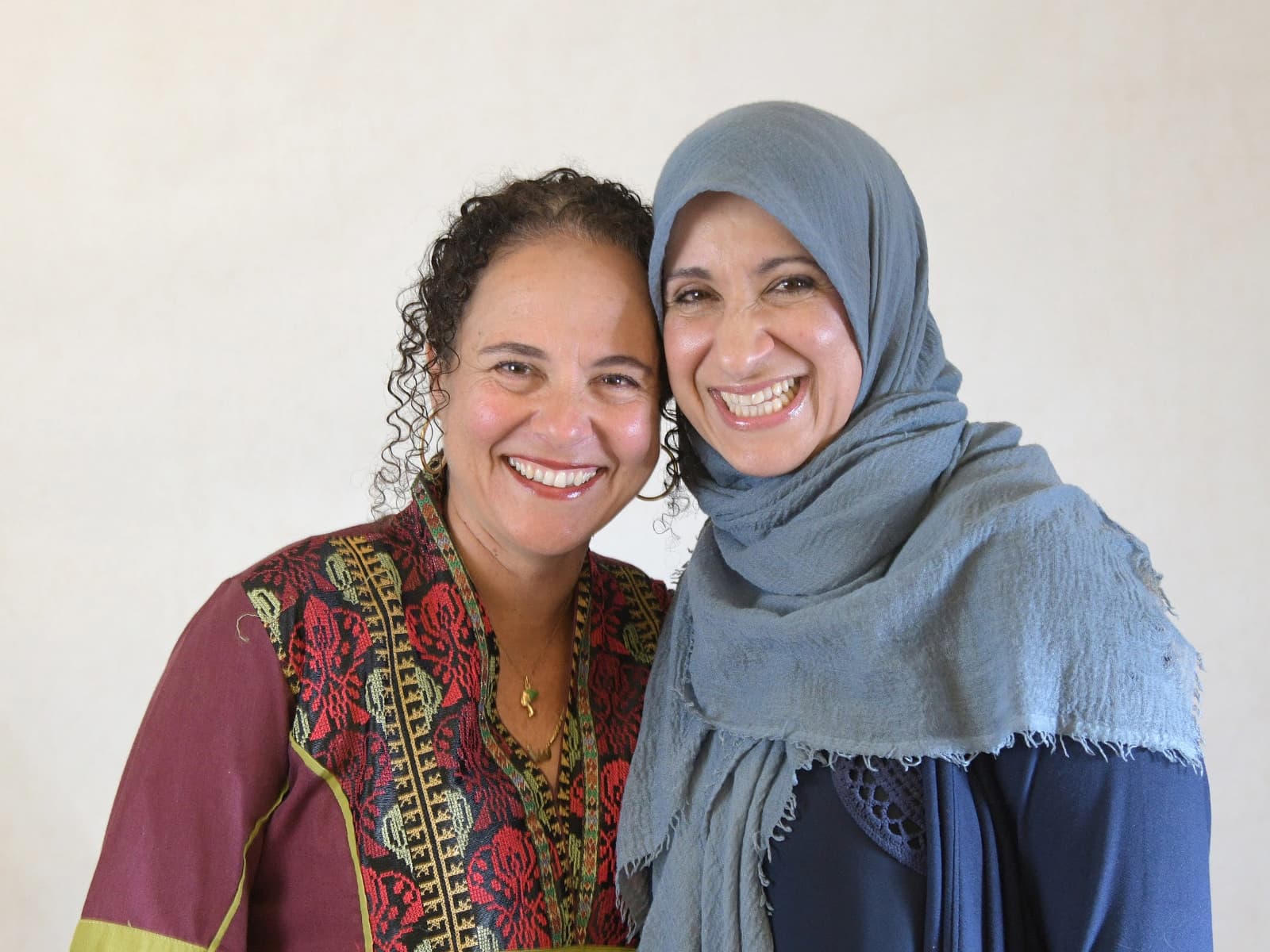
Sandra Sarrouf was born in Beirut, Lebanon. Her father is Lebanese, and her mother is Egyptian. Born during the height of the Lebanese civil war, Sandra’s family fled Beirut and lived in Egypt, Greece, and France before immigrating to Orange County, CA in 1979. She graduated from University of California, Santa Barbara and moved to San Luis Obispo in 1999. For over 25 years, she has contributed to our local community through civic engagement, board leadership, entrepreneurship focused on cultural belonging, and teaching cultural dance studies with the Cal Poly Theatre and Dance Department. She lives in Los Osos with her husband and three children.
Chapters
Currently playing
Introduction
Family Origins in Lebanon and Egypt
parentsBeirutLebanon
Family’s Migration from Lebanon to California
parentsmigrationBeirut
Early Memories from Orange County, CA
houseneighborhood(s)brother(s)
Finding Community in California
Arab communityclassmatesschool
Between Being Arab and American
cultural rootsculturecollege/university
Connecting with Arab Culture at University
musicdanceArab culture
Connecting Between Career Path and Personal Experiences
cultureminoritiesglobal relations
Moving to San Luis Obispo, CA
University of California, Santa BarbaraCaliforniaenvironment
Difficulty in Finding Community in SLO
small town(s)communitythe outdoors/nature
On Being Neither American Enough nor Arab Enough
American identityAmerican cultureArab identity
Raising Children in San Luis Obispo
childrencommunityactivism
Feelings of Home and Belonging
belongingplacefamily


