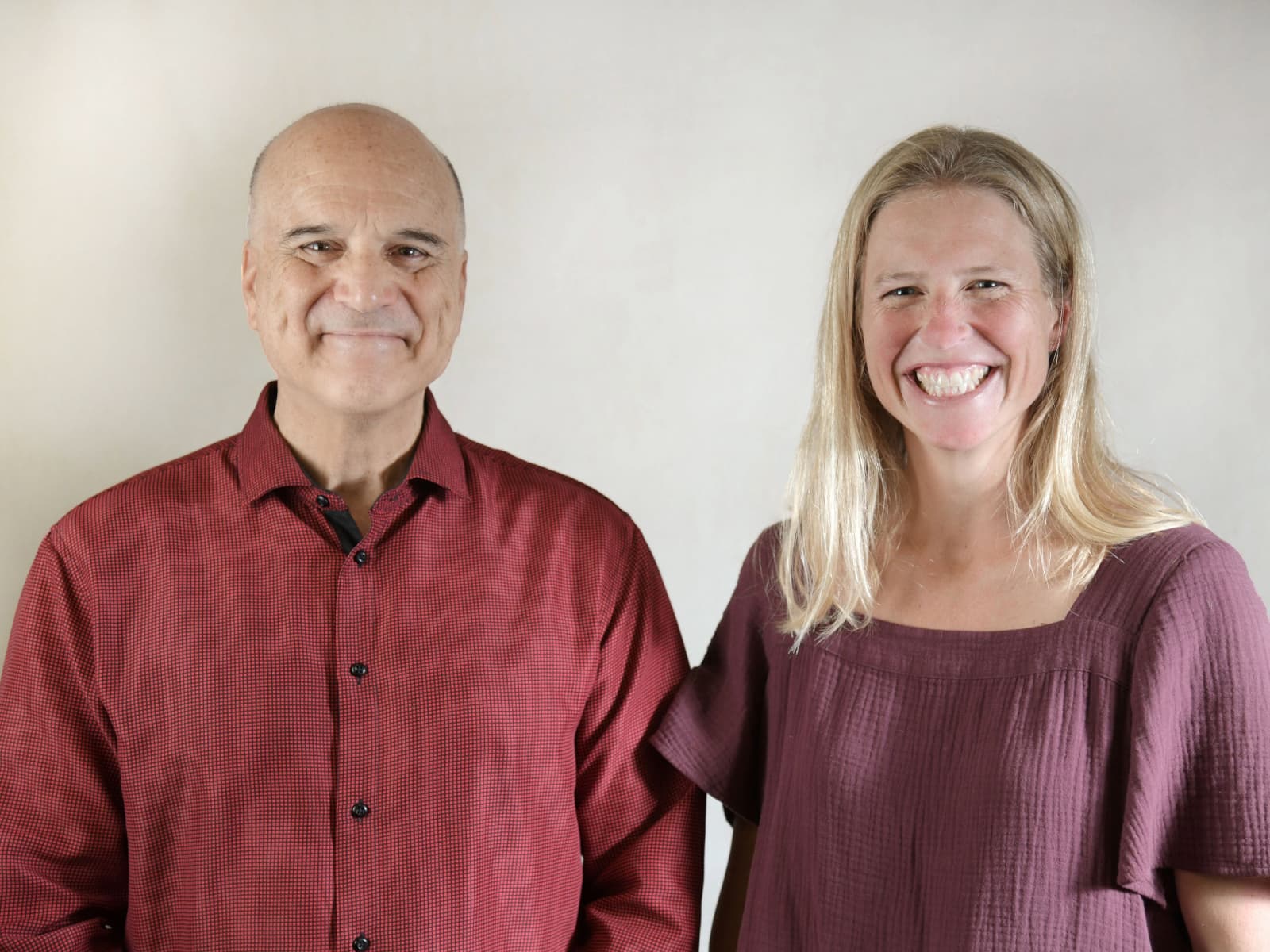
Interviewed by Elizabeth Sine · Recorded on August 26, 2025 · Duration 2:20:36 · Language English
[00:00:00] Elizabeth Sine: All right. We are here recording an oral history interview for the Mawtini project. Being interviewed is narrator Kenneth Habib. And Kenneth, I'm gonna have you say and spell your name, please.
[00:00:18] Ken Habib: Okay. Kenneth Habib. K-E-N-N-E-T-H H-A-B-I-B.
[00:00:23] Elizabeth Sine: Wonderful, thank you. And conducting the interview is myself, Elizabeth Sine.
[00:00:29] Elizabeth Sine: It is August 26th, 2025, about 11:30 at this point, AM, and we are in Grover Beach, California. And before we dive into your story, just want to confirm. Kenneth, do we have your consent to record this interview?
[00:00:49] Ken Habib: Yes.
[00:00:50] Elizabeth Sine: Thank you. Do we have your consent to archive it with the Mawtini project?
[00:00:55] Ken Habib: Yes.
[00:00:56] Elizabeth Sine: Wonderful. Thank you.
[00:00:58] Elizabeth Sine: Okay, so getting started, would you be willing to share when and where you were born?
[00:01:06] Ken Habib: Sure. May I start just by saying thanks? It's great to have you doing this and I really appreciate all of what all of you all are doing to bring this project to pass. Yeah. Thank you.
[00:01:21] Elizabeth Sine: Thank you. It's a pleasure to be a part of it, and thank you for your willingness to participate and to share.
[00:01:27] Ken Habib: Yeah, yeah, of course. So, when and where I was born, I was born in 1959 in Detroit, Michigan, where there are a bazillion other Arab Americans. [Laughs.]
[00:01:39] Elizabeth Sine: Okay. What are some of your earliest memories when you think back to growing up in. Or did you grow up in Detroit?
[00:01:48] Ken Habib: I did not grow up in Detroit. Right. It's the right question.
[00:01:51] Ken Habib: I, we moved out here, my family moved out here when I was only one. So I don't remember living in Detroit at all, of course. But I do have, I've traveled back there a number of times and I have this kind of transplanted midwestern culture that's come along through my family, you know?
[00:02:11] Ken Habib: I grew up in California. We moved to Sylmar, California, which is in the Los Angeles area. And to Canoga Park, California, then to Simi, and that's where mostly I grew up. I have cousins like many an Arab American family. I have a large extended family. So I grew up around cousins, and extended family more generally speaking, including the friends of the family who would be so close to be considered friends of the family, you know, that sort of thing. But, so that's where I grew up. And from there I've moved a lot of places.
[00:02:46] Elizabeth Sine: Sure. So when, when you mentioned that you moved out here around the age of one, by here you mean California?
[00:02:55] Ken Habib: Yes.
[00:02:56] Elizabeth Sine: And mostly in those earlier years, Southern California, LA area, broadly speaking.
[00:03:01] Ken Habib: Yeah. And those cities specifically is where we lived. Yeah.
[00:03:04] Elizabeth Sine: Okay. And had your extended family already been in that area and that was what brought your family over there, or...
[00:03:12] Ken Habib: Yeah, nice insightful question. Yes. The answer is definitely yes. We had an aunt, my dad's, I had an aunt, my dad's sister moved out here with her family and my dad and mom and my older brothers, you know, the family moved out here and more came out here too.
[00:03:37] Ken Habib: So we have a, still most of our family is in Michigan.
[00:03:42] Ken Habib: But, um, but we have a lot of family out here too.
[00:03:44] Elizabeth Sine: Okay. And you mentioned several places that you grew up. Sylmar, Canoga, Canoga Park?
[00:03:52] Ken Habib: Mm-hmm. Simi Valley.
[00:03:55] Elizabeth Sine: Simi Valley. Did you have, in your memory of growing up, did it feel like you moved around, like, was that a lot? Did you feel like, what, how did that kind of multi-stage movement across your upbringing play out in your memory?
[00:04:13] Ken Habib: Yeah. So no. The answer to, that's for sure. No. And I think largely because when we moved out to California, I was only one. And when we moved from Sylmar, that was before I remember also, I don't know how old we were. To Canoga Park. I have some faint memories of Canoga Park, but we moved out to Simi when I was maybe eight. And I know a lot of folks have lots of memories from like, when they were four or five, but I really don't. For whatever reasons, you know. My whole growing up life for the most part, I remember being in Simi.
[00:04:49] Elizabeth Sine: Mostly Simi Valley. Okay.
[00:04:50] Ken Habib: Yeah. And that area also, I mean, I spent a lot of time in that general area, but that's where we lived.
[00:04:56] Elizabeth Sine: Okay. And was that like, you moved there around age of eight? Was that like through your teenage years?
[00:05:05] Ken Habib: Till 18. Yeah.
[00:05:05] Elizabeth Sine: Okay. So thinking of early memories then. Being able to place them mostly in that space. What jumps out in your memory, like kind of when you think about that era.
[00:05:19] Ken Habib: Well, if I think about that, there are so many, yeah I'm not sure where to start with that, but if I think about the place like, like Simi, Thousand Oaks, San Fernando Valley, because those were the kind of the, that was the area I was in at that time.
[00:05:36] Ken Habib: The place for me evokes the hills there, and I love being outside and in nature. So, whenever possible I was just, you know, gone from morning until night in the hills, with my dog, with my whatever, friends riding bikes, you know, and kind of the, the sense of freedom associated with all that and the experience of, you know, the flora and fauna and just, you know, just all of that.
[00:06:06] Elizabeth Sine: And you mentioned all the extended family and friends and all of those circles of people. When thinking about those aspects of your early memory, who stands out, like are there any particular kind of moments, memories, people that stand out the most when you're thinking about early life?
[00:06:33] Ken Habib: Certainly my parents, you know. My family was a close family. You know, we had dinner together every day. It's funny, the older I get, which thankfully at this point in time, gives me a lot of years to look back on, the greater they loom in my memory, you know, the extent of their impact on me.
[00:07:03] Ken Habib: I don't if it sounds obvious or not, but I'll just go ahead and say it was just incalculable. So certainly them. I have three older brothers. Growing up they mostly weren't in the house, but because of the closeness of the family, we saw each other, you know, with some frequency.
[00:07:27] Ken Habib: And then in terms of extended family, you know, my closest sort of lifelong friend would really be a first cousin who is about my age. And, you know, we just grew up in those very hills, you know, tumbling through the hills and having fun and getting into trouble and all of that. And then, yeah, so that, I guess that's the answer to that.
[00:07:53] Elizabeth Sine: Yeah. So your family moved from Detroit, and you mentioned most of your family still being in the Michigan area. Could you share about like how and where, when your family moved to Detroit? Where does your family trace their heritage and where does Detroit and Michigan fit into that picture?
[00:08:23] Ken Habib: Yeah. Oh my goodness. That's a giant question. So just get me right back on track, okay, if I digress or get lost somewhere along the line. So my, all four of my grandparents came from Lebanon, from what is now Lebanon. My dad's side, both my grandmother and grandfather from my dad's side came from Mount Lebanon. Jabal Libnan.
[00:08:50] Ken Habib: My mother's side, my grandfather and grandmother from my mother, came from the north of Lebanon called Tripoli or Trablus. And so they came in what we would normally call the first major wave of Arab Americans. This would be the wave that brought, you know, Gibran Khalil Gibran, for example. That would be at like the beginning of the 20th century, goes way back.
[00:09:22] Ken Habib: And, so, you know I've oftentimes thought about what that would've been like, you know, because I mean, that was just a different world than the one I grew up in, you know. My dad's father came over, I think when he was 16, so I'm just imagining what that was like for a 16-year-old to come out of Mount Lebanon, make his way to the sea, hop on a ship, you know, and wind up at Ellis Island, you know, in New York. I think he had a lot more guts than I have, frankly. But so there was that passage here.
[00:10:14] Ken Habib: That was all considered at that time, Lebanon, as part of Greater Syria, which is the historical entity of Greater Syria or Belad Al-Sham. And, so when they came here, they were more often than not considered Syrians and in fact were Syrians, depending on how you wanted to look at it, you know? But at any rate, when they came to the United States, all four grandparents wound up moving to Michigan.
[00:10:50] Ken Habib: And, the Detroit part I have thought about a lot. That's my dad's side. There's the, you know, at that point in time, there's the automotive industry, there's Motown, there's jobs, and that's exactly what immigrants who really had nothing, you know, needed. You know, jobs, a way to support themselves, that sort of thing.
[00:11:13] Ken Habib: My mom's side went up to Grand Rapids. So there, you know, I'm not entirely sure how, what got them to Grand Rapids. It well might have been other family connections, because oftentimes that's just how things work, you know? Immigrants go to where other parts of the family already are. But that's how they got to Michigan. And now I don't remember if I'm answering your question.
[00:11:43] Elizabeth Sine: Oh no. It's all relevant. It's all just part of the story. And so just to kind of fill out some of the pieces of the chapter that you're sharing is, one of the things I wanted to ask is, so what I'm hearing is that they all arrived in Michigan, in Grand Rapids and Detroit, independently. And they met in Michigan, both sets of grandparents. Is that correct, as far as you know?
[00:12:10] Ken Habib: Yeah, that's a great question too. Let me just think about that for a moment. This is where I should call my brother because my brother knows this down, he knows it really well.
[00:12:17] Elizabeth Sine: And it's okay if you don't know either. Just trying to kind of track all the different threads that you're sharing.
[00:12:25] Ken Habib: Yeah. Let me think for just a second. So on my mom's side, and on my dad's side, yeah, I can't give you a good answer on that. I think at some level the marriages weren't arranged marriages, but like people knew each other, you know, and so the opportunity came to pass that way, as far as my grandparents went.
[00:12:51] Ken Habib: Now my parents, I know how they met, but as far as how my grandparents met, I think, you know, it was like people knew each other and brought these folks together and that worked out. And so they got married, and they were certainly young also, you know?
[00:13:06] Elizabeth Sine: Yeah. And thinking about that too, and you mentioned one of your grandfathers being 16 and making the move to the U.S. Do you know what drove them to move from, like what drove that decision?
[00:13:24] Ken Habib: Yeah, that was, I think a pretty classic case of, you know, wanting more opportunity in life, wanting to get out of sociopolitical persecution. At that time, pre-World War I, it was the Ottoman Empire. There, as no doubt you know, the stories are legion of enduring famine and imposed famine. So, you know, and I don't know what it would've been like. I can only imagine, you know, hearing the stories from across the world of that opportunity, especially in ways that I can't even imagine, you know. I mean, I can go online and, you know, I'm in touch with friends in Lebanon daily, you know, and I just can't imagine. So, I don't know, maybe a newspaper or whatever.
[00:14:17] Ken Habib: And so that, yeah, that came up like it did for so many people in the world as a way of improving their lives and escaping, you know, for all intents and purposes, persecution. Yeah.
[00:14:32] Elizabeth Sine: Yeah. Are there aspects of your grandparents' life and story that have let, that are part of your family's stories that get passed down. Did you hear much about your grandparents' story through your parents? Was there much talk about their experience or was it more private? Or how did the conversation flow or not?
[00:14:59] Ken Habib: Yeah, no, there certainly wasn't private. There was plenty of talk about the family and the history. I mean, I can kind of picture my dad's home and upbringing even though I never saw it, you know? They, he came up poor. And his dad died when he was young and he was the oldest boy and so when his dad died, he wound up being the, you know, the major breadwinner, as did his older sister too. They were really bringing in the food for the family. And, as in lots of Arab larger families like that, there's a wide range of ages. And so, the younger ones, I mean, he was an older brother to them, but he was also almost like a dad, you know, somewhere in between to them, you know?
[00:16:02] Ken Habib: So that's my dad's side. My mom's side did better off financially. Also a relatively large family. Seven kids, seven surviving children. I think back in those days, sometimes kids might die from like a disease or an accident more often than nowadays. And they were better off but I remember my mom saying many times how hard the Great Depression hit her dad. How they just really lost everything. And she was thankful and they were thankful for being able to get by. But, I think it must have hit him really hard having, you know, brought up a family with my grandmother and sort of made a middle class life for themselves only to get hit so hard, you know, which is of course a classic American tale of the Great Depression.
[00:17:13] Elizabeth Sine: Yeah, absolutely. And your parents then met in.... How did they meet?
[00:17:24] Ken Habib: My parents actually have a pretty sweet meeting story. So, back in those days, and still, actually, in these days, but I think somehow, I imagine it back in those days as having maybe more sociological or cultural import, but I could be completely wrong about that.
[00:17:46] Ken Habib: But there were cultural clubs, you know, and so there was like Syrian American Club, Lebanese American Club, that sort of a thing. And so my dad and my mom met at a dance or party, you know, of the Syrian American Club. And they would've thought of themselves as Syrians, for the reasons I mentioned and as you know.
[00:18:15] Ken Habib: And so, my mom was working at the front door with her friend, you know, letting people in, taking tickets, and that sort of thing. And my dad arrived with his best friend, who I grew up knowing as Uncle Eddie. He was just like, you know, family to me. He was that close to the family. And I guess my dad had it in for my mom pretty quickly and asked her to dance or something like that before too long. And, she said, "Well, no, you know, I have to, you know, I'm working here. So, but let's see later it might be possible," you know, one of those kinds of things.
[00:19:06] Ken Habib: So, sure enough, my dad came back later and, you know, I guess asked her to dance and she said, "Well, I don't know if, you know, if I can do that with the work here." And her friend who she was working said, "Go dance!" You know, so they wound up dancing and kind of, the rest is history, you know. It turns out that that best friend of my dad's, turned out that his girlfriend became the best friend of, who's now my aunt, is my Aunt Yvonne.
[00:19:37] Ken Habib: They've both passed away too, my parents and them. But, so, they, my Aunt Yvonne and my mom became best friends and, so that's, I've just, they've been like my aunt and uncle ever since, yeah. And I should probably say my mom's name was Rose and my dad's name was David. As long I'm getting this far.
[00:19:59] Elizabeth Sine: Yeah. Yeah. Thank you for that. Yeah thank you for sharing, that's a really sweet story. And then, okay, so they connect at that event, as you say, the rest is history, they start a family in Detroit. Your three brothers and you're the fourth. Are there other siblings?
[00:20:19] Ken Habib: No? Yeah. Yeah. You have four boys. I always feel like I should say my poor mom. I'm sure she would've loved to have had a girl, but what can I say? Yeah, so they met then, but my mom was in Grand Rapids, my dad was in Detroit. So there was some distance there in cities and my dad's dad, my grandfather died before they got married, so there was some kind of, you know, transitioning there within my dad's family. But, yes, eventually, you know, they did stay in touch. And managed to get together, you know, over that distance. And eventually did get married in Detroit and my mom moved to Detroit.
[00:21:12] Elizabeth Sine: And then when you, all, after you were born, they all moved to Southern California. And that, that included your brothers too, everyone made that move together.
[00:21:22] Ken Habib: Yeah.
[00:21:22] Elizabeth Sine: Okay. And you already had, you still had family in Michigan, but you also had family in Southern California at this point. Did you have a connection to California before, well, no, you were one. So, they would've had some connection to California, is that right?
[00:21:39] Ken Habib: Absolutely. Yeah. Absolutely. Yeah.
[00:21:40] Elizabeth Sine: Okay.
[00:21:41] Ken Habib: Yeah, it's very close family in that respect. So they came and moved very near to my dad's sister, my aunt. Yeah. And her family.
[00:21:53] Elizabeth Sine: What do you remember about in growing up in Southern California in addition to romping around in the hills with dogs, cousin, friends and the like. What do you remember about school?
[00:22:08] Ken Habib: School was great. It's funny, as somebody who works in school, you know, now, I've thought a lot about school, as you can imagine, and about my schooling. Schooling was great. I went to Catholic school all the way through 12th grade for the most part. There were some very brief stints in public school, like in summer school and in a transition going from Canoga Park to Simi.
[00:22:35] Ken Habib: But so, they were relatively, you know, small-ish, I guess. Anyway, I felt like I knew most of the people, you know, in my grade, my class, you know? So there was that. I'm still in touch with friends from like, when I moved to Simi at eight, which I just, you know, more and more cherish over the years that, you know, so. And from high school too. Just, you know, I was just in touch with a friend from high school a couple of days ago.
[00:23:14] Elizabeth Sine: Wow.
[00:23:15] Ken Habib: So, yeah, I have some super fond memories there and I've, you know of, as you can imagine for sure, I mean, I've had a lot of teachers, formal teachers in life between K through 12 and 12 years of college. You know, between a bachelor's degree in one area, a master's degree in another area, a doctorate in another area. And a couple of the most incredible teachers in my life were from grade school, fifth grade and seventh grade. Fifth grade was a nun. She was fierce. Oh my goodness. She was fierce. Back in those days, you could get away with things that you couldn't get away with nowadays, you know what I mean? So she'd come and grab your ear if, you know, if you were out of line and that sort of thing.
[00:24:07] Ken Habib: But, I will, well, you're asking, so I'll tell you. You know, I'll never forget, I imagine, one of just the classroom activities that she did at one point was to have everybody prepare to present something to the class. So we're in fifth grade, I guess we're 10 or something like that. And, so I don't know what everybody, I can't remember what everybody did, but everybody did, told a story or sang a song, or I don't know, recited a poem or did something.
[00:24:44] Ken Habib: And so I think I mentioned to you, at some point, I don't know if we were recording or not, but started out in music by learning protest songs and I'm self-taught on guitar and singing and songwriting before I ever went back to school and studied music. And so, I was already doing that by 10.
[00:25:08] Ken Habib: And so, I came in and I sang "Blowin' In the Wind" by Bob Dylan, you know, just acapella. And the class really liked it somehow and she really liked it. And so, even though the activity came and went, over the course of the year, the rest of the year when she was looking for something to do in class, like sometimes we will do as teachers, you know, it's like, let's change things up here.
[00:25:34] Ken Habib: She'd say, "Well, Ken, why don't you come up here and sing 'Blowin' in the Wind.'" Sort of, I had a, you know, a return performance a couple of times. And I have no idea really to what extent, you know, that would've, I don't know really what the impact was, but I certainly remember it.
[00:25:49] Ken Habib: And who knows? I mean, it's possible that if it weren't for her, I would've, I don't know, never gone on in music. I kind of doubt it. It's probably overstated, but she certainly made an impact on me.
[00:26:02] Elizabeth Sine: Yeah.
[00:26:03] Ken Habib: And then my seventh grade teacher, I would love to, I've often thought somehow to just find him if he's still alive, and just tell him how much I appreciate him. He, of course seemed older to me at the time, as I would guess I would've been 12. So, but he was in fact young, I would guess maybe like 30.
[00:26:34] Elizabeth Sine: "Old."
[00:26:34] Ken Habib: Yeah, exactly. And, he was just as transparent as can be. He was kind of a, he was a very, I don't know, he was a very kind of a balanced guy in certain ways. He was a very heady, intelligent guy, but he was also a very kind of a no nonsense gruff guy. He was a veteran. And, so back then, that would've been during the Vietnam War. And, he made it clear from the beginning of class that he was anti-war. So he was like one of the folks who came back from the war and, and said, okay, or came back, did his service or what have you, and decided, "Okay. This is wrong. You know, I'm not doing this and I'm actually gonna be active in making a stand against this."
[00:27:28] Ken Habib: And so he came in, you know, when he, I can still remember this too, and this a really long time ago, but he invoked music, you know, and he says his favorite artist is Joan Baez. And so I thought, okay, I can already identify with this guy, you know, because she was somebody, it was part of that, that quote unquote protest music and anti-war music that I was already, who was already formative for me as a 10, as a 12-year-old at that point in time. Because I was learning those songs, you know?
[00:27:57] Elizabeth Sine: Yeah.
[00:27:58] Ken Habib: And so, he was just, he was just a very remarkable, he had a very remarkable way of being able to push us farther than we might have gone. I remember there were, he gave us a project. Anyway, long story short, the project went, we had like a sort of a final project, as it were. It's what I would call it nowadays.
[00:28:25] Ken Habib: But, I remember I did this project on liquifaction because there's a water table under Simi Valley. And so, and there are earthquakes are a problem. And so if an earthquake came along and, you know, I probably knew about it more, I probably knew more about it when I was 12 than I do now, but, you know, if the ground shakes enough and the water comes up, and so I built a model and anyway, several of us, he ended up taking to City Hall to give a presentation. And I, just looking back on it now as a teacher, that guy was, that guy was a serious teacher, you know?
[00:29:03] Elizabeth Sine: Yeah. I am hearing in that too, like him giving you an opportunity to like, take your own ideas seriously.
[00:29:16] Ken Habib: Yeah.
[00:29:16] Elizabeth Sine: That's really powerful. Thank you for sharing all that. And I'd love to hear more about, you mentioned getting into music through protest songs, teaching yourself guitar so that by the time you're eight you're playing "Dust in the Wind" and the classroom
[00:29:39] Ken Habib: "Blowin in the Wind."
[00:29:39] Elizabeth Sine: Can you share more about how you entered into that? It's not very often you hear an 8-year-old kind having a kind of political energy around something like that. So can you share about that pathway a little more? Whether that's about the protest song part of it or being drawn to music or how those things come together for you in that moment in life.
[00:30:09] Ken Habib: Yeah. Can I just make an aside here? I feel like I should name those teachers. So Harry Burns.
[00:30:17] Elizabeth Sine: Harry Burns is the seventh grade teacher.
[00:30:18] Ken Habib: Yeah. Seventh grade teacher. Mr. Burns. Thanks so much to Mr. Burns and fifth grade sister Mary Anthony Michelle.
[00:30:26] Elizabeth Sine: Wonderful.
[00:30:26] Ken Habib: Yeah. Yeah. Many thanks to them. So "Blownin' the Wind" was the song, that song.
[00:30:32] Elizabeth Sine: Oh yeah. Sorry.
[00:30:32] Ken Habib: Yeah. That's okay. Yeah, it's okay. And, so how did I get into that? Well, my next two brothers, the first of whom is seven years older than me, and the next is 10 years older than me. They were playing guitar and singing themselves, and they were, so they had a big impact on me that way. And they were playing those kinds of songs.
[00:30:59] Ken Habib: And I think they basically learned the same way, you know, none of us, well, I can't really speak to that. Actually, the older of them actually did get some, I think, very good music lessons back in Detroit singing in a choir. I don't know about my other brother. But at any rate, they were certainly an influence that way. So I think that's part of it.
[00:31:23] Ken Habib: I think another part of it is, I might be going out on a limb, I might in part be going out on a limb here, but in part I'm certainly not, also. I think, you know, part of, kind of growing up Arab American, part of growing up Arab American involves an engagement with politics. And I don't mean that necessarily at all in a really a cerebral way, but just because you're politicized, you know, life is politicized.
[00:32:03] Ken Habib: And so, I don't really ever remember life that wasn't politicized, you know what I mean? So, that was a kind of a natural place for me to be. I didn't somehow feel like I was in foreign territory as it were, you know, or doing something that, that, you know, was a stretch for me or something like that. Yeah.
[00:32:31] Elizabeth Sine: Yeah. That makes sense. Was there family, you mentioned your brothers being into music and also, did they also play guitar? Or how did music run in your, were your parents into music?
[00:32:49] Ken Habib: Yeah, no. They did play guitar and sing. They still do, you know, for fun. One of them was actually a serious musician, if I can put it that way. And he was spending much of his time playing music, you know, at a young, in his twenties, his teens and twenties, playing in bands and, you know, trying to make it that way. That's a very tough road to hoe, I won't go into that lecture. I give it to my students, but, you know, making a living as a performer of any kind is extremely difficult.
[00:33:29] Ken Habib: And music is probably about as good as it gets. I mean, being a, you know, professional poet or a dancer or, you know, sculptor or painter, I mean, it's pretty tough. And so, anyway, so I'm sorry, I lost track of the question now. Would, would you...
[00:33:47] Elizabeth Sine: Oh, no, I was just asking about kind of how music figured into your family, your home.
[00:33:52] Ken Habib: Oh, yeah.
[00:33:54] Elizabeth Sine: As you were picking up and gravitating around music. Like how that, kind of either stemmed from, or like how it fit into home life.
[00:34:05] Ken Habib: Yeah, yeah, yeah. So my parents weren't musicians. There was no musical training in my life really, in school or elsewhere, before I had already learned enough to play out semi-professionally.
[00:34:22] Ken Habib: But my mom and my dad both had an ear. I know that from, well, from my dad from hearing him sing informally, like whether it was, you know, next to him at church. I had an ear enough myself to be able to tell that he could sing. You know what I mean? Yeah, it wasn't like he was off key or something like that.
[00:34:45] Ken Habib: I also had an ear enough to tell that his musical sensibilities, like in terms of ornamentation, were Arab with the way he was ornamenting songs that weren't really Arab. But although at that point in time, I probably wouldn't have been able to articulate it the way I'm doing for you now. And my mom, my dad died when I was 16, so I was in the middle of, you know, my teenage years and, you know, wish I could somehow go back and make that a lot easier on him. I can't do that. But, my mom, I was, you know, very blessed to see get much older. And so she and I, and she and I had a very close relationship. And we got to do a lot of things together. You know, I've lived abroad and so I would bring her abroad and we'd like do some really cool vacations together and stuff like that.
[00:35:55] Ken Habib: But, so through my different phases of life--which actually we haven't really talked about, which is fine with me, but we haven't--there were times when she and I would just be singing together, whether it was in the kitchen, or on a drive. And she actually had a nice voice so she could like hold down, you know, a melody part and I could harmonize with her and because of different things, I knew a lot of old songs that she knew. So it was actually pretty cool. So they were both musical, but they didn't have any musical training and neither did I.
[00:36:28] Elizabeth Sine: Yeah. Yeah. Wow, that's really lovely. At what point did you identify music as something that you wanted to pursue?
[00:36:40] Ken Habib: Yeah, it's an interesting question. I've thought about that so many times. I think it's probably always been there, Elizabeth. Like, just somehow, if you look at old movies of me that I don't even remember, except from the movie, you'll see me dancing around, jumping around to music and it's like old family friends who are now long gone will say, you know, is Kenny still singing this song or something?
[00:37:04] Ken Habib: You know? So I think it was just kind of always in there. But I didn't really, for whatever reasons, probably primarily personal ones, but I really, whatever they were, I didn't really know how to pursue music. You know. I didn't, it's not like being, you know, a whatever, I mean, it's not like being an engineer, let's just say, you know. Well, you do this, you go to college, study, you're whatever kind of engineering, you know, you apply for engineering.
[00:37:37] Ken Habib: So, and I also didn't have any experience playing in front of people except, and different personalities are different ways, you know, some people have no problem, other people have stage fright. So without getting into all of that, by the time I decided I was going to college at 18, I went to, UC San Diego, and you know, you didn't have to declare a major there. So I was undeclared, which, actually I think is a perfectly fine way to go. No comment on any other systems. But, you know, I was figuring things out. And so, among the GE things I did, I took a year of physics for physics majors, year of calculus for math majors, a year of philosophy for philosophy majors. Discovered how crazy hard all three of them were eventually, you know.
[00:38:35] Ken Habib: And also began playing music a whole lot more, meeting a whole different circle of people playing a whole lot of different kinds of music. You know, if I came up in the kind of music I described to you, kind of folk music and folk protest music. And that expanded through high school, of course, into rock music. By the time I got to college, though, you know, immediately, you know, jazz was coming into the picture. Different kinds of music from around the world. Oh my goodness. I'll never forget listening to John McLaughlin with his group Shakti in the gym at UC San Diego.
[00:39:15] Ken Habib: I don't know if you know who that is, but just a phenomenal English guitarist who's still around. But, I can still picture sitting on the floor in the gym blown away thinking to myself, I've never heard anybody play anything like this. And so I was at that point in time playing, you know, a few hours a day. Which you have to do to learn to play, you know, you have to invest in it.
[00:39:43] Elizabeth Sine: And you were doing that independently or...
[00:39:45] Ken Habib: Yeah. Yeah, just playing independently and with other people who I was meeting, like there was a classical guitarist across the hall who became a friend. And I didn't play...
[00:39:55] Elizabeth Sine: But casually not like...
[00:39:56] Ken Habib: Yeah, exactly. So I didn't play classical guitar at all, and he didn't play folk or rock like I did, but somehow through a friendship and whatever we had in common, we were able to connect and play together. And he'd show me things and I'd show him things. And I met other people that way. And so I increasingly became cognizant that eventually, you know, if all went well, I'd be, I'd have a job, you know, and it would be nice if that was in music, but I still didn't really know how to do it.
[00:40:27] Ken Habib: So, at UC San Diego, I took a class in music. I don't remember what it was called. It was something like, I don't know, Introduction to Music or something. And it was exactly what I didn't need. It was like go out and listen to the soundscape, which I totally appreciate, you know, and I might give that assignment, but I was already listening in a lot of ways that way, A, and B, what I really wanted at that point was a way to understand what I already knew how to do by ear.
[00:40:58] Ken Habib: Because I was already playing things at that point in time that I really, I couldn't play now because then I was playing for a few hours a day and now I have almost no time to play. You know, so in terms of facility and I wanted, I didn't know how to talk about it or communicate it. I could only show it or hear it and do it. And so, and that wasn't part of that class at all, like learning how to read music and write music.
[00:41:23] Ken Habib: So anyway, that's how that was. I ended up going to UCLA in my junior year, transferring and majoring in communication studies there. And I wanted to minor in music as a way to, you know, start to get my foot into, you know, music in some formal capacity.
[00:41:45] Ken Habib: But they didn't accept minors in music at that point in time, so I couldn't do that. There were no, there was a music major, really good music major, but they didn't have music minors. So I couldn't do that. And so I graduated.
[00:42:02] Elizabeth Sine: And what did you decide on for a major?
[00:42:03] Ken Habib: Communication studies. Which ended up being, it was like its own great thing that I never really saw coming. Because I'm sort of wired that way. Especially through my mom's side. She was an exceptional listener. So like people would seek her out, you know? And sometimes I'd have to pull her away because people would just talk her ear off, you know, she was actually listening in earnest, you know. So to whatever extent I got that gift, that comes, my dad was a great listener too, but my mom was remarkable. And so, I don't know, I just kind of tune into communications in a lot of respects. So I wound up majoring in communication studies with specialization in interpersonal communication. You could do that, or media.
[00:42:54] Ken Habib: But I couldn't study music then, so. I do remember still though, my musical world expanding dramatically. I remember seeing Andrés Segovia, the classical, the late great classical guitarist at the Dorothy Chandler Pavilion. I remember, you know, just paying like a lot. Because I worked my way through college. I was working full-time in restaurants and I don't remember what the ticket was. I think it was probably $85 back then, which was a really lot of money to me, you know, and it was up in the nosebleed section, you know, and I remember looking at the stage. And thinking, okay, I've never seen anything like this before, because, well, first of all I didn't grow up with quote unquote classical music.
[00:43:39] Ken Habib: And then second of all, there was nothing on the stage except a stool and a foot stand for his, for his. And I'm, you know, I'm thinking, you know, like speakers, I wasn't thinking that for him because I knew enough to know that. But that's the stage I was accustomed to, you know? And drum set and all that. And so at this point he was not a young guy. And I'll never forget, you know, so he comes on the stage and he's just kind of walking like this, you know, slow walk with his guitar. And it's so dramatic already, there's just this guy walking out on the stage with his guitar really slowly, and there's like nothing on stage except a place for him to sit and put his foot.
[00:44:20] Elizabeth Sine: In a huge space.
[00:44:21] Ken Habib: In this huge space. Yeah. And I'm way up there thinking I don't, I'm not even gonna be able to hear this, you know. And the audience just goes absolutely silent. And he goes into it and I could hear it fine. It was, I was just spellbound. It was astounding. It was just amazing. So I continued to have some great musical experiences and at that time I ended up, I'm probably going on here, but should I keep going on here?
[00:44:51] Elizabeth Sine: Oh, yeah, yeah.
[00:44:52] Ken Habib: Okay. So at that time, I wound up, I was in a mall and I heard some singing. And at that point, voice has always been a big part of music for me. And that ties doubtless in part to folk protest and where lyrics are really important, that sort of thing.
[00:45:10] Ken Habib: So I heard this singing and it was in harmony, so I naturally gravitated to it. I found, and I saw this choir singing. It was a barbershop choir, so they were singing four part harmony. And I love harmony and I was just kind of smitten by that. And I ended up talking to one of them and I ended up joining the choir and kind of advancing through the ranks there when I lived in Santa Monica.
[00:45:36] Ken Habib: And, so that was when I first began studying music formally. And it was, if I had any brains, really, I would've just really stuck with that. I had a phenomenal voice teacher who, looking back was actually really well known, Elizabeth Sabine. And she just had this knack for teaching voice, you know, she just was amazing.
[00:46:05] Ken Habib: So she helped me connect with my voice in a way that I hadn't before. You know, to be able to use it, you know, more safely, you know, and more effectively. And so anyway, I took not that many lessons with her, but that's when I first started studying music. And, I graduated and was completely broke, you know, from working in restaurants and paying my way through school.
[00:46:28] Ken Habib: And so I wound up going into engineering writing, you know, a kind of a focused technical writing, which I had never even heard of, but I took some of those tests, you know, that you can take that, ask you, well, what are you good at? What do you like to do? What do you bad at? What don't you like to do?
[00:46:46] Ken Habib: And a couple of times, you know, technical writing came up somewhere near the top. And so of the many things I applied for, mostly just to start to pay off student loans and you know, make some money and pay rent and that sort of thing. And I ended up taking one in engineering writing. And so now I joke with my students, although it's true, I made more money in my twenties with four years of college than I do as a full professor with 12 years of college. But I made my choices knowing what I was doing.
[00:47:19] Elizabeth Sine: Yeah.
[00:47:19] Ken Habib: Yeah. So that's, and then eventually, I lived abroad. I lived in Saudi Arabia. I worked in aerospace on a communications contract. And that enabled me to do some traveling. And so I lived in Saudi Arabia for a little over two years, first for two months, and then for two years. And that was amazing. I just met some amazing people and I'm still in touch with them too, just yesterday I was texting with them. And so I was playing in a band there on the side. And that was really great too.
[00:48:00] Ken Habib: And from there I came back to make the shift into music. Then I just quit, I had saved up money, paid off student loans, went back to school full time as a first year student again. Studied, you know, from the ground up. And school was a whole different thing for me then. I was in my, you know, later twenties and just brought a whole, I had traveled around the world and brought a whole bunch of different experience. I had already played music, you know, professionally or semi-professionally, and so it was just a whole different thing studying music at that point.
[00:48:35] Elizabeth Sine: So would that have been your master's degree or?
[00:48:38] Ken Habib: I got into a second bachelor's degree program. Started from the beginning studying music theory, musicianship, music history, all that stuff. I wanted to be pretty, I wanted to be systematic about it. And I needed to anyway, to talk the talk and walk the walk, you know.
[00:48:55] Elizabeth Sine: Where did you do your second bachelor's?
[00:48:57] Ken Habib: And I didn't, that was at UC Santa Barbara.
[00:48:59] Elizabeth Sine: Oh, okay.
[00:49:00] Ken Habib: But I didn't finish that. When I was in my third year, I applied to get into the master's program, which I could qualify to do at that point. Because I really just about completed all of the work for a second bachelor's degree. And that was in composition.
[00:49:17] Ken Habib: So I got my master's degree in composition, then I went back to engineering, technical writing. Actually I did that between second bachelor's and master's in medical surgical equipment manufacturing. And then because again, because I had just stopped working for a few years so I could invest in music, which was transformative for me musically.
[00:49:39] Ken Habib: And then, and then went back to school, finished my master's degree and still, you know, depleted the income. So I went back into engineering writing or technical writing in biopharmaceutical manufacturing. And at that point it was really kind of, well, I'll just say I feel like this is really a confessional, but I think, I think it's, just stop me if it's not germane.
[00:50:06] Ken Habib: But, so at that point I was in my mid-thirties, you know, so it was kind of a, it was kind of a, you know, I don't know, life crisis of, okay, am I going into music or am I staying, you know, with engineering writing? And finances were definitely a part of it. I mean, one, I could have stayed there.
[00:50:33] Ken Habib: You know, my main client, I was working for myself. My main client was a Fortune 500 biopharmaceutical manufacturer who had offered me a job to work for them a couple of times. And it was like, by comparison, believe me, by comparison to what we do, as professors. I mean, my job is like seven days a week. Working Monday through Friday, eight to five, you know, with an hour off for lunch was easy compared to what I now do. So it was pretty tempting.
[00:51:02] Ken Habib: But you asked earlier, you know, when did the music thing, it was just kind of always there. So the thought of walking from that, especially after having invested so much into it, was tearing me up. So I decided to finish and go back to school and finish, get my PhD in music. And that was in ethnomusicology. Ethnomusicologists were, my colleague ethnomusicologists were folks I just kind of naturally gravitated toward all along. Oftentimes they were older students like myself, who had come back to school for different reasons. They'd lived abroad somewhere. Similarly, they were bringing some knowledge of the world that I kind of grew up, I didn't kind of, that I grew up with and also experienced firsthand. And so there was a certain, I don't know, frame of mind is not the right way, but open-mindedness perhaps, that I just gravitated toward anyway.
[00:52:00] Ken Habib: And so when I went back to school to get my PhD at that point, I guess you could say I was fairly confident about my choices and had thought about it a lot. And so I came in already with a dissertation proposal in mind. And in ethnomusicology you pick two specializations, I had that all figured out and came in with that in mind and finished with all of that intact.
[00:52:33] Elizabeth Sine: Can I ask what the dissertation was? What did you, what were you drawn to at that point?
[00:52:37] Ken Habib: So Lebanon, my heritage, and then Fairuz, the super iconic singer and the music culture around her, yeah, that we were talking about earlier. So that's my dissertation is quite a bit of reading on that subject. Yeah. And my secondary specialization is what I grew up with, American popular music.
[00:52:59] Ken Habib: Although I had heard Arabic music as throughout my life, like going to weddings and where there'd be, you know, where there'd be Arabic weddings and I'd, and I remember the, I was never really particularly interested in the ceremony, which always seemed long, but the party afterward, you know, with the food and the music and the dance was a blast as far back as I can remember.
[00:53:19] Elizabeth Sine: Oh, yeah. And acknowledging that your research and study of Fairuz has continued since that time. Could you share what draws you most to that subject matter, to her music story?
[00:53:43] Ken Habib: Gosh, that's a very long story, but let me just say she, she is indeed remarkable. When I when I start to say that about her, all of my instinctive ethnomusicological slash anthropological, you know, cautions kick in, you know, about gushing and not wanting to gush.
[00:54:05] Ken Habib: Because it's not that, it really isn't. I mean, it's pretty solidly academically based. She's a really, I wouldn't be able to overstate how remarkable of a singer she is. In every respect. I mean, the timbre of her voice, her ability to control it, her execution as a performer on stage, her connection with the audience, as I was sharing with you, the perfect stranger who, you know, wanted to latch onto me at the copy stand, how prodigious her output was. It's astounding. I mean, my discography has over 110 albums. It's just, she started, she was recognized in middle school. She was singing professionally at like 12.
[00:54:55] Ken Habib: She's extraordinary. She was a girl, you know, I mean, and then she was a young woman. And she married a man who was also a budding composer, you know, just coming up, was working closely with his brother in a partnership. And so there's this family team eventually, because she married, wound up marrying the older brother.
[00:55:22] Ken Habib: And then they had a son who just only recently passed away, who turned, and this my cautions kick in here too, of all of the kids of famous musicians. Because 99% of the time I'm like, eh, you know? Yeah. Their parent was phenomenal. They're okay, you know. But this person really turned out to just be remarkable in a lot of ways for his compositional ability, his lyrical finesse and his politics.
[00:55:48] Ken Habib: He was decided, he decidedly, moved away from his parents to a much more socialist stance in Lebanon. Which appealed a whole lot more to a newer generation and also separated himself in certain ways from more, you know, conservative elements of society, if you will. So, yeah. But I will tell you this though, I made a commitment to myself when I started studying music formally in college when I went back.
[00:56:22] Ken Habib: Because I knew that people could study music. I'd known them and sort of learned to not like it anymore. And I already knew that I could play music on the side successfully and love it. And I wasn't willing to give that love of music up. So I had decided from the beginning, if ever it came to the point where I didn't like this, I was out of there.
[00:56:45] Ken Habib: I'd go back. Even now, I could, you know, in all likelihood go back to technical writing. I wouldn't do it now at this point. But, so every step of the way, I knew that I was either gonna keep liking it or leave it.
[00:57:02] Elizabeth Sine: Yeah. That love for music was so important, even if you had to guard it.
[00:57:06] Ken Habib: Exactly.
[00:57:07] Elizabeth Sine: I hear that. And so, recognizing how music was a part of your life, as you said all along though, along the way, you're having to make decisions about how the pieces of life kind of fit together and where the, where you can pay the bills and how that comes together. But ultimately you play music, you write music, you study music as a scholar. Is there a piece of that, like multifaceted relationship to music, are there any aspects of that that are most important to you? Yeah.
[00:58:00] Ken Habib: Yeah. It's a great question. Really. You're super insightful that way. You're onto something that I've thought about and wrestled with a lot, and I think I've come to be reasonably comfortable at this point in life saying that the answer is no, too.
[00:58:22] Ken Habib: I wind up being, I have long wound, I've just kind of always, it seems, been interested in a lot of things, whether for better or for worse, and sometimes it's been for better, sometimes it's been for worse. When I think about Cal Poly, I would think that one of the reasons they hired me is that I can fully speak and operate, fully speak the talk of, and operate in the realm of, Western European art music, sometimes just called classical music by, you know, in society. I do it, you know. I have a master's degree and I've studied it and taught it and performed it and composed it, and I love it.
[00:59:05] Ken Habib: Of course, I know there's also an entire world of people out there that produce music that's just as good and worthy of study, even though the academy in the United States of America, for the most part, largely disregards it in the focus of what we often, what sometimes we call the music of dead white men. So there's that, who I always feel like I have to say I love, but there's a whole wide world out there.
[00:59:38] Ken Habib: Yeah. I'm caught between the blower or whatever that is out there. Yeah. It's almost like a chainsaw. It's not, but...
[00:59:51] Elizabeth Sine: Yeah, some. Some kind of machinery.
[00:59:57] Ken Habib: Can you get me back on track?
[00:59:58] Elizabeth Sine: Oh yeah, absolutely. And I'm just gonna take a moment since we had a moment of distraction anyway, to check that the battery, there is a small possibility that as we continue talking, I may need to change the batteries, but we're good so far. So excuse my looking. In any case, yeah, I know we were talking about your connection to music as being so multifaceted and how you kind of move across these various ways of engaging with music. So okay. You've shared so much and thank you for kindof, sharing about the evolution of that relationship to music and how you moved through these different stages of schooling, making decisions along the way and, I want to come back to hear more about how you wound up on the Central Coast, but before we even get there, I did want to come back, if I may, to something that you shared earlier. And this is, it's multiple steps back in our conversation, but when we were talking about earlier stages of growing up, and you mentioned losing your dad at 16, which is, I'm sorry to hear such an early loss, and I wonder if you could, that sounds like a, a big moment in life and rather than gloss over that, I wonder if you wish to share more about that moment or what your experience of that was.
[01:01:31] Ken Habib: Sure. Let me take one minute to go back to your question about the different things. So you mentioned scholarship, composing, performing. So, just to, I'm not sure I ever really came out and said it. Yeah. I've just gotten comfortable with the fact that I live in those different realms.
[01:01:47] Ken Habib: And I do all of them. So I'm working on a book right now, the scholarship. Last night I was working on a composition. I was just, yesterday also setting up a gig to perform. It's just where I live, sometimes it's for better, sometimes it's for worse. So there's that.
[01:02:04] Ken Habib: When my, when my dad passed away, I was 16, yeah. And so, you know, it was the 1970s. It was sudden. He hadn't been feeling well that weekend. And I was kind of oblivious as a 16-year-old. But not so oblivious not to know that he wasn't feeling well that weekend. And so, but I didn't really know what was going on. I know my mom suggested that he go to the doctor and he said, "Okay, I'll go to the doctor on Monday." He didn't, well, he didn't really quite make it till Monday. What happened was...
[01:02:58] Ken Habib: Sorry, I wish, I wish that wasn't going on, but he's actually a remarkable, they're remarkable folks. He's a boutique guitar builder.
[01:03:05] Elizabeth Sine: Oh, wow.
[01:03:06] Ken Habib: Yeah. Yeah. It might be what he's doing might be doing some sanding, but anyway, so sorry.
[01:03:09] Elizabeth Sine: It does look like woodwork.
[01:03:10] Ken Habib: It does. Yeah. Yeah, yeah.
[01:03:12] Elizabeth Sine: Sawing.
[01:03:12] Ken Habib: Yeah. Yeah, yeah, yeah.
[01:03:13] Elizabeth Sine: Sorry. I'm not sure moving to a different space in this same room would make much difference.
[01:03:20] Ken Habib: Yeah. No, I'm okay.
[01:03:21] Elizabeth Sine: So I think we'll...
[01:03:21] Ken Habib: Yeah, yeah. Thanks.
[01:03:22] Elizabeth Sine: We'll just trust the mics to be picking up our voices.
[01:03:26] Ken Habib: Perfect. Okay. So, so that was the weekend and I remember it, on October 6th is the day he died in 1975. I remember in the middle of the night having a dream, a nightmare, and I never really had nightmares. And still don't, and I don't even really remember my dreams much. But that night I had this, it was actually this blissful dream that suddenly turned into a nightmare. I was walking in a meadow, I can actually still see it quite vividly, walking in a meadow and it was nice and sunny and there was like tall grass and there was a bee. And the bee was just kind of swirling around and I was kind of in a, kind of a dance with the bee.
[01:04:16] Ken Habib: And, and then suddenly the, the bee just swelled to enormous size and everything, like blacked out. It like encompassed me and I like raised out of bed, horizontally, you know, I didn't like get up. I like bounced up, you know, and yelled and, to the point where I sat on the side of the bed and thought, I've never experienced something like that, you know, that was really strange.
[01:04:42] Ken Habib: So I lied back down and, I laid back down and, you know, I got back to sleep. You know, just kind of wondering what that was about. It was just shortly thereafter I could hear my mom yelling my dad's name, you know, "David." And, "Get up David." And so this would've been at like 4:30 in the morning, still dark out. So I just, as soon as I heard that there was, you know, something that I really wouldn't be able to put into words and couldn't have put into words, there was just some connection immediately.
[01:05:23] Ken Habib: So I, as soon as I heard her say it at first, I just flew out of bed, stood in the doorway. I could see that my dad was having some kind of an, he was having a heart attack. I didn't know exactly what was going on at the time, but I could tell that he was struggling. And, anyway, without dragging you through all of that.
[01:05:47] Ken Habib: Suffice it to say that, he died then. I told my mom to, you know, call an ambulance. She was still trying to figure it out in shock herself. And, I was giving him CPR. He died while I was doing that. The paramedics came. They relieved me. Gave him more vigorous CPR. I'll never forget the one of the guys that, you know, again, they seemed older to me at the time, but he was probably only 30 also himself, twenty, late twenties maybe.
[01:06:22] Ken Habib: I remember him looking over, I was, at that point, my mom and I were standing at the foot of the bed. He was in bed still. And I was standing with my mom and I remember him looking over at us. Because I knew he had passed away because I was giving him CPR when he took his last breath. And I remember him looking over and not saying anything, but I was just reading it on his face, you know, like, you know, like, sorry for your loss.
[01:06:51] Ken Habib: So that's how it happened. And, my dad was super loved guy. Uh, so, you know, when he was suddenly gone, because it was sudden, you know, it was like he was there on Sunday and Monday, he wasn't, you know. There was a, you know, there was a kind of a vacuum, you know, of where his presence was.
[01:07:25] Elizabeth Sine: So you shared about many different things along the way of kind of moving into college and then these different stages of graduate school, ethnomusicology, and completing that dissertation is kind of where we left off. So from there to like, what happened, how did you wind up on the Central Coast? What are we missing in between those chapters?
[01:07:58] Ken Habib: Gotcha. Okay. So, let's see. So we got from my bachelor's degree to Saudi Arabia, I went back to school, to Santa Barbara, studied music. So I wound up getting my master's degree in composition. I went back to Simi Valley, Thousand Oaks. My main client was there in Thousand Oaks. Went back to Santa Barbara for my doctorate. So that's where I was, and that's when I, and at that point, I had since I, as I mentioned, the Middle East or West Asia North Africa, as a main focus. Lebanon, more particularly, Fairuz especially being the focus, I wound up going to Lebanon several times. And so, first time I went there was 1998. I think it was. And so I've been there a number of times and so, but at the end of the day I finished my doctorate in Santa Barbara.
[01:09:04] Ken Habib: And so of course I was on the job market and I received a visiting assistant professorship at Pomona College, which was awesome, for an amazing, now passed away, ethnomusicologist, who was really, she was my age because of the way, you know, my career was circuitous, you know, so, but she was like a mentor to me, you know, just because she was more along in her career in ethnomusicology. She was really wonderful. So, she had a visiting position elsewhere, as a senior scholar, and so I worked there for a year. That was wonderful.
[01:09:48] Ken Habib: Then I kept applying for jobs. At that point in time, my mother was getting sick, and so I was applying for jobs all over the place like we usually do, you know, and I had interviews in a number of places. Cal Poly contacted me. And so Cal Poly was within, you know, striking distance of Simi and Thousand Oaks where my mom was. And so, and I always liked this area, although I didn't really, hadn't really spent much time here. And so, that's what got me here.
[01:10:28] Ken Habib: So is when I got that offer, I thought, you know, because we can wind up anywhere really. You know what I mean? Because it's not like being a plumber or a doctor or a carpenter or a lawyer or whatever, you know, where you can go to a town and set up shop. You have to have a job offer. So, I thought that was, rather than wait, I just took it. I had another offer. I was also teaching Arabic at Santa Barbara City College, before I got to Pomona.
[01:10:59] Ken Habib: And so before I went to Pomona, that worked out really well. And I really, really enjoyed it. And I enjoyed the people I worked with at City College. I don't know if you've worked at a community college. Yeah. I really liked it. I've worked at Cuesta here too. It's, just like the stress level's dialed down, you know, and it's really all about teaching.
[01:11:25] Ken Habib: So, and the people I worked with there were fantastic. Anyway, long story short, they had a cultural day, like a culture day. So they asked me to play music, and I played music. I was happy to, you know, so I played music, Arabic music, and they loved that. And the president introduced himself and he said he wanted to hire me full time to teach. And it was, that was, I was, my heartstrings were torn in there for a moment because I was like, well, you know, at that point I hadn't finished my dissertation and I still would've planned to do that, but I was just about to, and at that point, I already had the job offer at Pomona.
[01:12:04] Ken Habib: And so, I was like, but the Pomona one, that wasn't a permanent one, you know, so I knew I'd still be on the job market. And I decided, I said, you know, thank you very much, but you know, I got my doctorate in ethnomusicology. I have this. I'm gonna continue there. So I did, I got the, ended up getting the job offer at Poly. Took that because I was still relatively close by. And for a long time, I drove down every weekend. And it became hard just with how much work I have here, it's just like so much work. It, you know, got to be like every other weekend, every few weeks. And that's...
[01:12:41] Elizabeth Sine: Did you have any connection to the Central Coast, Cal Poly or anything in this local area prior to getting that job offer?
[01:12:49] Ken Habib: Not really, huh-uh. Yeah.
[01:12:51] Elizabeth Sine: Could you share your first impression or like your first connections, observations, like when you came here for the first time?
[01:13:01] Ken Habib: Yeah, so I think I mentioned to you earlier, I love being outside in nature, so that was certainly something that struck me. You know, I mean there's just so much that's so easily accessible here, you know? And now we have the Pismo Preserve right here, whether it's, you know, Montaña de Oro or the Bluffs. Or I can just walk right down the street.
[01:13:23] Ken Habib: So, my colleague who was on the search committee, who chaired it, was very kind to meet with me and take me around before I moved up. So, he took me to different places and I've always gravitated toward the ocean. So when I was 18, I moved to La Jolla by the beach, and I almost, my entire adult life, I been by the sea or the ocean. So I came to Grover Beach and I really like it here. And so, so nature, I guess in short is part of it. That was part of what just struck me.
[01:14:00] Ken Habib: I think another thing that really struck me is, especially having grown, I grew up in Simi before Simi was a city, so I, or at least when we moved there. So I remember when it was still very rural, you know, orange groves and walnut groves, that sort of thing. And, but I also spent a lot of my time in the San Fernando Valley, Los Angeles.
[01:14:23] Ken Habib: So I was around, and Simi was in the orbit of Greater Los Angeles. So I also knew that. And then I lived there, you know, when I went to UCLA and so, and when I lived abroad, I lived the in cosmopolitan center of Saudi Arabia, Jeddah, for example, and then in Beirut, Lebanon, which was in certain respects, historically one of the cosmopolitan centers of all of West Asia, North Africa.
[01:15:00] Ken Habib: So coming to the Central Coast, moving here was, I don't wanna say shocking, but it was, startling, let's say. It was a little startling just how out of touch with a major urban center I was. So I remember, for example, driving home from the university at night, because I spent a lot of, all days and well into the nights here, you know. I remember coming home at night, driving and thinking and being a little unsettled because it was just like so dark, you know?
[01:15:36] Ken Habib: And there was like nobody on the freeway. I mean, I wasn't used to having nobody on the freeway, you know? And then living here and driving, you know, maybe coming home at 10 o'clock at night and seeing nobody driving on the road. I thought, it was just, it was a little odd.
[01:15:57] Elizabeth Sine: Sure. Yeah. So dramatically different. When did you begin your job here?
[01:16:03] Ken Habib: 2006.
[01:16:04] Elizabeth Sine: Okay. So, and I wanna talk more about your connection to the Central Coast and your time here since moving there. But again, I want to not miss some important things that are coming up along the way. And one of those is, you mentioned multiple trips to Lebanon, including living there for a time, and I'd love to hear more about that, especially knowing that your family comes from Lebanon and, anything that you feel moved to share about that experience, those experiences, and what stands out most to you from that?
[01:16:57] Ken Habib: Yeah, thanks. I'm not sure where to start with Lebanon. It's, Lebanon has always been there in my life. Like literally, always been there. So even though I hadn't visited there until, you know, much later in life. So there's _that_, and doubtless you're, you know, aware of how life can be in diaspora for people. So, you know, there's sort of _that_, you know, wherever it is that _we_ were from, you know, and then there's the actual place. You know what I mean? And so these things, they develop, you know, and we construct them and reconstruct them.
[01:17:40] Ken Habib: But Lebanon's always been there, you know, some of my earliest memories of, I mean, I've eaten Arabic food my entire life. I would go to school as a kid eating, my sandwiches were in Arabic bread. And there were times when it was like a little unusual, you know, like I was the only kid there who had Arabic sandwiches and Arabic bread. Everybody else had whatever, Wonder Bread or something, you know.
[01:18:06] Ken Habib: And by the time I got to Lebanon, which you're asking about, I had already lived in Saudi Arabia. And at that point in time because of my work, I traveled around the peninsula, including to Yemen, which wasn't for work that was strictly for fun. Just an amazing, delightful experience. And also elsewhere in the region. And, so by the time I got to Lebanon. And oddly I hadn't visit visited Lebanon. I wanted to, but it just didn't work out. And so by the time I got to Lebanon, it was, I had sort of my whole life experience before I traveled abroad and lived abroad as one layer. And then I had my life living abroad and traveling in Arab countries and other countries as another layer. And then I sort of finally got to Lebanon, you know?
[01:19:06] Ken Habib: And, you know, there's a whole process that you go through of establishing life someplace, you know, learning to live someplace. It'd be true if I moved from, you know, San Luis Obispo to Boulder, Colorado, you know, but it'd be different than that. But it's still, you know, you sort of set up shop again, and so.
[01:19:28] Ken Habib: When I moved to Lebanon, the first time I went there, I went there for two months, so it wasn't a short trip. And, it was hard as would be expected. It was fantastic in ways that, you know, that I would've hoped for but not necessarily counted on and in certain respects exceeded what I could have hoped for, you know, because there's firsthand experience as opposed to whatever, you know, I thought, or we might have thought, you know, in doing something like that.
[01:20:07] Ken Habib: And I mentioned to you earlier, I've been really fortunate to meet wonderful people wherever I've lived. And so from literally that first trip for just two months, you know, I am still in touch with a person from that trip. And so, and then when I moved back, I visited there a number of other times given, you know, presentations. Lived there for a year here and for a year there, where, you know, I was able to develop closer relationships. And so it's been remarkable.
[01:20:47] Elizabeth Sine: Hmm. And thinking about what you shared about witnessing, certainly experiencing and seeing many of these changes firsthand. Part of what you shared though, is experiencing it in the diaspora, and through that kind of arc of events, specially Civil War and onward, do you have recollections of seeing, whether actively like following, kind of events in the news or whether it's, you can't avoid knowing it and being in the air you breathe because that's just your world. Do you have recollections of how that, how those, how events in Lebanon in particular and the Arab world more generally, how those registered for you? Even being physically, you know, in a place like California?
[01:22:00] Ken Habib: Oh yeah. The answer is just a kind of a resounding yes to all of that. Like I, as I mentioned earlier, Lebanon's always been there for me. And so has political life as it were, you know, so the socio-politics, the current events, and to some extent the history of the region has just always been there and something that I've covered on a regular basis. In growing up through what I, you know, heard around me from, you know, parents and aunts and uncles and cousins and extended family and friends and so forth.
[01:22:40] Ken Habib: And then, you know, growing up and studying the region, you know. At UCLA, for example, getting to study, take a Middle East history class with somebody like Nikki Keddie, you know, it was just, gosh, I'll never forget it just, you know, studying with a scholar like that. And I, to this day, I mean, I read the news around the world every morning, which makes for really difficult days these days.
[01:23:08] Ken Habib: Because every single morning I, it just the day gets colored with the genocide in Gaza, you know. And I'm eating breakfast at the time, so it's like every day is colored that way. But that's, yeah, that is where I live. I know people who, who can't do that. You know, people who, Arab Americans like me who can't do that because it's just hard, too hard to do it. But I can't not do it because I can't unplug myself. I don't mean, like out of habit. I just, that's not, I either can't be that person or don't want to be that person. I think it's probably both, or at least I don't want to be that person. It's hard and it hurts, but I can't unplug.
[01:24:00] Elizabeth Sine: Yeah, I hear that. And thinking about that experience and being on the Central Coast, and so this more recent chapter of life, having taken the job here, you said 2006? Can you share about, a little more about the experience of being here? What kind of, how it is that you have set, you put, you used the word "set up shop" when you move someplace new. What is, how have you found yourself at home here? Do you feel at home here? What does, what does that even mean? Kind of what are your places, your people, anything you feel like sharing?
[01:24:48] Ken Habib: Elizabeth, you have a knack for asking great questions.
[01:24:50] Elizabeth Sine: Okay. Yes. So I, we are back on and back recording now.
[01:24:55] Ken Habib: Alright!
[01:24:56] Elizabeth Sine: So, yes, I was asking about, kinda settling into the Central Coast, making this home to the extent that it's home slash whatever that means, and wherever you want to take that.
[01:25:13] Ken Habib: Right? So, huge question. Home and diaspora of course tied very much together. This is home, so there's part of the answer to that. I mean, this is where I live and I've made, as we've reiterated, I've set up shop here. So, this is home for me. And in fact I've lived here longer than anywhere in life, growing up or any place else. But it's funny, those formative years in Simi from when I was eight to 18 were, that will always probably be the most home to me in terms of that idea of home.
[01:26:00] Ken Habib: I've thought about home a lot in life, both academically with my work on diaspora, and also just personally. And I have more than more than one song written on the subject of home. But that's a different discussion.
[01:26:15] Ken Habib: You've asked about the Central Coast. It's, you know, in certain respects it's a wonderful place to, to call home for the reasons I've mentioned with, with nature and, and also proximity to family and I've met wonderful people here, friends. In other places, sorry, in other ways, it's a pretty difficult place. Also for reasons I've mentioned disconnection from urban centers. Those urban centers just have a whole lot more representation of different cultures, you know, including different Arab Americans, whoever they might be.
[01:27:02] Ken Habib: So, it's, you know, you know, it can be when you're with somebody who, you know just understands you, life in a certain respects can be much easier. You know, there's no explanation of this or that. And I'm not talking about the, not wanting to talk of course, or communicate. It's just that there are these bases that you share, you know, that we share that enable relationship to go even further, you know, without covering the bases first, you know?
[01:27:42] Ken Habib: And so, there are some folks here that have become like family to me in that way that I grew up with, which, at this point in my life I especially cherish, you know? Because you never really know if that's ever gonna happen again, in a way. But I've met some people here who are like extended family to me, I'm very close with them, and there are things that we just understand together that don't need explanation.
[01:28:21] Ken Habib: So yeah, being here is, being on the Central Coast is at one level as normal as normal is. Because I've made home here and I've made home in San Diego and Santa Monica and Santa Barbara and the San Fernando Valley and Jeddah, Saudi Arabia and Jubail, Saudi Arabia and Beirut, Lebanon and Jubail, Lebanon. And I've lived, I've spent summers in Vermont.
[01:28:56] Ken Habib: I've kind of liked every place I've been. Every place has its, you know, attractions. So in that sense it's, there's, it's, there's no problem at one level. And it's, it's fantastic for all the ways I've mentioned, but in another level or in another way, it's very difficult for the reasons I just mentioned.
[01:29:18] Ken Habib: And I think even for a bigger reason, which is that at some level, I don't know that I'd ever feel perfectly at home, anywhere. It's just part of how I'm wired. You know? It's just, I guess, part of who I am, you know? It makes me think of the old classic folk song, "Wayfaring Stranger," you know, I'm a wayfaring stranger in this world, traveling through.
[01:29:47] Elizabeth Sine: And one of the things I'm hearing in what you're sharing too, is in addition to kind of having experiences and ties to so many places, the relationships that you've formed along the way are such an active and alive part of your life. The fact that you have friendships now while on the Central Coast that are rooted in your middle school, high school days, and all the places that you've been since then. I guess I'd love to hear anything you feel like sharing about kind of being here, but maintaining those relationships and friendships. Like that's, I dunno, if there's anything about that that you feel moved to speak about.
[01:30:44] Ken Habib: Well, it makes me, the first thing I think of is in some respects it's, I guess there are a couple of, I don't know, things in contrast or dialectic or something. I mean, it's wonderful, like when I'm in touch with some of the older folks especially, I can't help but realize, I've known this person for a long time, you know, and it might not have worked out that way.
[01:31:09] Ken Habib: So there's that, that really, that appreciation of that. But it's also hard. I can think of people who I've not maintained relationships with. Or been able to, and who I tried to do that with who I really miss, you know, who I really miss. Especially like when I lived in Saudi Arabia. I mean, that was before we had email and, and I mean, now I could hop on WhatsApp and, you know, see somebody face to face.
[01:31:43] Ken Habib: So I remember writing letters, but I remember when we left each other, he was a close friend. And I remember saying, you know, it is going to be hard to keep this up by letter. I mean, you know, I'll write, but I just don't see, I know myself and don't see myself writing a letter a day, or a letter a week, or even a letter a month. Some people are super fast at things and I'm not. I'm slow. I can do things, but I tend to be slow at them, you know?
[01:32:25] Ken Habib: So, and I could tell you of other experiences. I remember just briefly, I remember studying with a composer. She was amazing. And so I'm like really slow at everything it seems. So she's coming, and while she was setting up, she'd say, "Hey, take a look at this." And I'd look at it and I'd go, "Whoa!" You know, and I'd go, "Great. It looks great." And she said, "Well, what do you think about the end?" I'd say. "These two endings." And I'd go, "Wow, they both look really great to me." She said, "Well, I wrote this yesterday." And I'd be thinking, "You wrote this yesterday?!" I mean, if I could write this, it would've taken me, you know, months or something, you know what I mean?
[01:33:06] Ken Habib: So people are just wired differently. So for me to write a letter to that friend, it's something that I'd pour into. And I did it a number of times, but you know, it honestly, it breaks my heart that I wasn't able to maintain that. So it's hard. Yeah. Relationships, you know, I mean, you have to work at relationships
[01:33:27] Elizabeth Sine: Yeah.
[01:33:28] Ken Habib: To make them happen. And, I wish somehow I had more time and more energy to, you know, and that's how it is.
[01:33:37] Elizabeth Sine: Yeah. Is there anything that you would call like a greatest challenge about being here?
[01:33:46] Ken Habib: What would be the greatest challenge?
[01:33:47] Elizabeth Sine: Yeah.
[01:33:49] Ken Habib: That's an interesting question. Well, I have an answer for that question, but I probably, I should probably leave that out. I'll be happy to answer that question.
[01:34:03] Elizabeth Sine: That's perfectly fair enough. Yeah.
[01:34:04] Ken Habib: Off the record, I will answer that question for you.
[01:34:05] Elizabeth Sine: Yeah, yeah, yeah. In terms of the, kind of, the things that you've come to appreciate, or the things that do make this a home for you. And you mentioned, you know, forming relationships, people that are like family here. Is there anything more that you feel like sharing to kind of animate that? Or like, are there places across the Central Coast that, where are the people that you're finding, where are you finding your people? Where do you feel connected? Where do you feel like kind of in your element in this place?
[01:34:48] Ken Habib: Yeah, it's interesting. Place is such a thing for us, you know, that's certainly germane to the idea of home, you know, and diaspora and so forth.
[01:34:55] Elizabeth Sine: Well, and feel free to take, it doesn't have to be like a geographic place either. Like, so feel free to crack that open and carry it in just any direction that has meaning for you.
[01:35:05] Ken Habib: I was just gonna do that. Yeah. Place in a geographical sense. It doesn't seem to matter so much. So some are in North County, some are out on the coast, you know, in North County. Some are local here in, in South County. And to me all of that is pretty close by having lived in the, you know, in the sphere of Los Angeles where driving an hour is normal.
[01:35:31] Ken Habib: So, so that's come about primarily relationally, of course. But how does, how do the relationships come up? I just meeting, you know. I mean, I can think of specific, I can think of the specifics for different people, how we would meet. But there's the meeting, you know, like we're meeting.
[01:35:50] Ken Habib: And this is, there's something that happens here that could never happen when we're looking at our screens on a computer for all of the time we spend there much less typing, even if we're looking, you know? So, things happen that way. And cultures of course share things and also contrast in ways.
[01:36:11] Ken Habib: And one of the things, one of the famous attributes of Arab culture is hospitality. So it winds up being an easy entree, I mean is if, generally an invitation happens quickly. You know what I mean? And so then the question is just one of to what extent, you know, you keep things going, all things considered, you know, to what extent you can and that sort of thing.
[01:36:41] Elizabeth Sine: And I guess, now correct me if I'm wrong, but part of what I'm hearing and you're sharing too, is that, while the job and the campus might have been what brought you here, where you're finding community and connection is not necessarily tied to campus. That you're finding connections in a kind of more ad hoc way and day-to-day life.
[01:37:06] Ken Habib: Definitely
[01:37:07] Elizabeth Sine: Off campus.
[01:37:08] Ken Habib: Yeah, definitely.
[01:37:10] Elizabeth Sine: Across [inaudible] area. Okay.
[01:37:12] Ken Habib: Campus sometimes times is a springboard for different reasons. Because I get found there, you know, because it's campus. But yeah, I think the ad hoc part of it is yeah, for real.
[01:37:27] Elizabeth Sine: Well, acknowledging that we're past the time that I promised to be letting you get back to your day. I do wanna respect your time and your day and, but before we wrap up, I want to ask you if there's anything that we haven't gotten to or that I haven't asked about that we should touch on, or that you feel moved to speak about?
[01:37:55] Ken Habib: No, thanks Elizabeth. No, I'm good to go. I appreciate you, you have a real knack for asking these questions. Part of the time, I'm imagining myself in your position because I've asked the questions and wish that I would've have had the sensibilities that you have, you have a real gift for it. No, I would say, feel free to ask, get back a hold of me if like something doesn't work out or you want clarification or what have you. But, I think I've bent your ear probably way more than I planned to.
[01:38:31] Elizabeth Sine: Oh, I appreciate it so much. And, yeah, no, thank you. Thanks for your kindness and also for your time and everything that you're sharing. And also I'll just note that, if you were to think of anything that you wanna share after the fact, days later, weeks later, feel free to reach out.
[01:38:51] Ken Habib: Okay. Thank you.
[01:38:52] Elizabeth Sine: Even if you don't think of something in this moment.
[01:38:54] Ken Habib: Thank you.
[01:38:55] Elizabeth Sine: So I'll go ahead and end the recording and then we can wrap up.
[01:38:59] Ken Habib: Okay.
[01:39:00] Elizabeth Sine: Okay, we are here conducting an oral history interview for the Mawtini Project. Conducting the interview is myself, Elizabeth Sine, and our narrator being interviewed is Kenneth Habib. And Kenneth, I'm gonna invite you to say and spell your name, please.
[01:39:21] Ken Habib: Kenneth Habib. K-E-N-N-E-T-H H-A-B-I-B.
[01:39:25] Elizabeth Sine: Thank you. And today's date is September 22nd, 2025. It is just coming up on noon and we are in Grover Beach, California. And before we get going, I just want to confirm that we have your permission to record this interview.
[01:39:53] Ken Habib: Yes.
[01:39:54] Elizabeth Sine: And do we have your permission to archive it with the Mawtini Project?
[01:39:57] Ken Habib: Yes. I'll be making some edits to it and that version, yes.
[01:40:01] Elizabeth Sine: Sure. Great. Thank you.
[01:40:03] Ken Habib: Uh-huh.
[01:40:04] Elizabeth Sine: Okay. So this being our second round interview, I wanted to focus specifically on something that we spoke less about in terms of your Central Coast chapter of your life, this most recent chapter since moving here. Specifically with the lens of music in mind, and you being a musician and a music professor and a composer and all the things, the many things that you do related to music.
[01:40:38] Elizabeth Sine: And so revisiting your first encounters with the Central Coast, your move here, your settling in, you shared a bit about your experiences in our last interview, but if we reflect on that specifically from the vantage point of you as a musician and how you experienced and observed this place especially early on from the standpoint as a musician, what struck you or what impressions did you have?
[01:41:17] Ken Habib: Let's see. So maybe to take a minute to sort of lead up to 2006 when I got here. So my musical life was varied, and I think we talked about that. So, you know, I learned by ear, got a guitar, started writing songs and playing guitar and singing when I was, like, 12, you know. 10 I probably got the guitar, and was really kicking in around 12 or so.
[01:41:45] Ken Habib: And I had been playing, I was playing semi-professionally before I knew how to read music. I'd wanted to study music, but kind of recapping, I think, on what I said before. So, but eventually I did go back to school and study music. So in the process leading up to 2006, you know, I was playing the folk protest songs on acoustic guitar, and that was expanding into, you know, sort of soft rock, and then eventually an electric guitar and rock music.
[01:42:15] Ken Habib: And eventually, especially when I went to college, you know, I started listening to jazz in earnest and I eventually started playing some jazz music and singing vocal jazz also, and just without going through the whole litany of all of that. And I'd also played in church going back to when I lived in Saudi Arabia.
[01:42:37] Ken Habib: It was all in, you know, small places like this. It was underground and, actually, I just got a text today from one of my friends from that time in my 20s. So, life, you know, thankfully is very rich for me that way. And so, but leading up to 2006, so I had lots of different kinds of musical experiences.
[01:43:05] Ken Habib: I feel like maybe, let me just put a few more of them on the table. When I did go back to school, of course, I studied Euro-American art music. So, you know, I was in student productions of operas and, you know, sang in more choirs than I could count. And it's all, and all of it was awesome, you know?
[01:43:25] Ken Habib: And so, coming here to San Luis Obispo, when I hired here, it was definitely a big transition in terms of life, and I guess music being a part of life, you know, it's part of the whole thing. You know, everything's intersectional, as it were. And so, I knew I'd be stepping into a tenure track job that would be very, that would be intense. I mean, it would take a lot of work, you know? I have to admit, I didn't realize just how much of time it would take. You know, just, I mean, I have poured into it over the years. And, I think I probably have mentioned to you, it's largely been a seven-day-a-week job. I mean, yesterday was Sunday, and I spent half the day doing email for the university.
[01:44:16] Ken Habib: So anyway, my experience upon arrival in 2006 was one of coming from, you know, that very varied background that I really enjoyed, that rich background. You know, sort of a, well, just that. And, when I arrived, my task was, within the music department, to establish an ethnomusicology program.
[01:44:44] Ken Habib: So there were two classes on the books that I needed to teach. And, so I reinvented both of those. And I really like the way those worked out. And then the other charge that I had was to create an ensemble. So, and that's pretty normal in eth-, it's, you know, it's kind of half normal in ethnomusicology.
[01:45:14] Ken Habib: There are a lot of ethnomusicologists... First of all, let me backtrack. Ethnomusicology is, of course, an ology, so we're expected to be academics, scholars, that sort of thing. You can't get by without that. But because of the history of ethnomusicology, it's also, it's focused on indigeneity and on the entire world, whereas musicology, historically anyway, has focused on the music of, has focused on Western European art music.
[01:45:47] Elizabeth Sine: Just to pause and recap real quick.
[01:45:48] Ken Habib: Yeah. Yeah.
[01:45:49] Elizabeth Sine: So you said you were starting up the ethnomusicology program. So there wasn't one before, just those two classes.
[01:45:56] Ken Habib: That's a great question, because I was throwing that in question in my own mind. So there kind of was one. The person who established it, he left to go someplace else. And then, at that point, it transferred to a couple of lecturers who maintained it until they could hire another tenure line faculty.
[01:46:21] Ken Habib: So, that's when I came in. And, one of the charges then, besides these two classes, was, to start an ensemble.
[01:46:33] Ken Habib: And I think I might have mentioned this to you last time. Forgive me if I'm repeating myself. But, so I asked, you know, what kind of an ensemble? Because, as you know, I've played a lot of different kinds of music, and so they said they didn't care. I said, well, I could do, you know, an Arab music ensemble, which is, of course, what I wound up doing.
[01:46:53] Ken Habib: I could do an Appalachian folk music ensemble. I could do a contemporary, like, rock music ensemble. I kind of didn't think that would take any traction, but I put it out there, you know. I could do a larger West Asian, North Africa ensemble, which in part is what I do now, even with the Arab Music Ensemble.
[01:47:13] Ken Habib: And the answer was, you know, it's totally up to you. So I did the Arab, so I started the Arab Music Ensemble. So it started in 2006 when I, upon arrival. That gets us to there. I could run with this in any number of directions. Your call.
[01:47:29] Elizabeth Sine: I mean, it's, wherever you feel moved to go. Just, yeah.
[01:47:35] Ken Habib: Okay. The group was just remarkably received, remarkably well received. I shouldn't have been surprised, and I guess I wasn't really surprised. But, you know, sometimes you can not be surprised but still, be surprised, I guess. You know? Just a little taken by it. People from across campus, I mean, it wasn't like I was out advertising or anything. But, you know, people from across campus from all different kinds of backgrounds, you name it, you know, ethnically, religiously, class-wise, economically, I mean, in that sense.
[01:48:24] Ken Habib: And in ethnomusicology across the country, actually, I think I started to say before, we're expected to be ologists, but embracing performance as a method of understanding a culture has been a part of ethnomusicology since its inception. It's kind of a learn by doing, if you like.
[01:48:41] Ken Habib: You know, as we say. So, so a number of ethnomusicologists across the country have ensembles, in a sense like I do. And, oftentimes what they have done, what we have done, is open the ensembles to the larger community because we know that in the larger community there might well be people who are indigenous to the particular background, who have expertise in that background, who have lived, you know, in the particular places and so forth.
[01:49:13] Ken Habib: And so, this is very normal that way, in that sense. So we got people from different majors across campus and different backgrounds. We got people from different, walks of life in the community. Faculty members, one of our faculty members from the very beginning is still there. This is the 20th year, and I just love her to bits. She's just amazing.
[01:49:35] Ken Habib: So it was really enthusiastically embraced by members. Those first performances, for the first, I think I'd have to check, but maybe three years, we were performing in the [Performing Arts Center] Pavilion, and we could max it out at about 250. We sold out every single one. The audience just came out of nowhere, and you know, honestly, Elizabeth, I don't really attribute, I certainly don't attribute it to me.
[01:50:09] Ken Habib: I certainly would give the credit to the people in the group, the members. But, to be frank, you know, I think I'd be remiss not to mention that there was just this hunger. You know, there was this thirst for _something_, you know? And I think a lot of people just felt, without necessarily coming out and saying so, "Oh, I'm glad there's, you know, some alternative here," you know?
[01:50:39] Ken Habib: Now of course, if it were up to me, I'd multiply it times 1,000, you know, and just get all kinds of groups here representing different cultures or, you know, sharing different cultures and that sort of thing. But, yeah.
[01:50:55] Elizabeth Sine: Yeah. And, I'm hearing you kind of experiencing that flow of support and enthusiasm as kind of reflecting the hunger that existed. I'm curious if you had a sense of that hunger in the community for kind of a more diverse musical experience. Did you have a sense of that hunger before you got into creating the ensemble?
[01:51:22] Ken Habib: Did I have a sense of the community here?
[01:51:24] Elizabeth Sine: Yeah, the local community's hunger for that kind of music.
[01:51:27] Ken Habib: No, because I wouldn't have had that opportunity. When I got here, first of all, my life has been extremely busy. So I came here and I was right at work, so.
[01:51:36] Elizabeth Sine: Head first, yeah.
[01:51:37] Ken Habib: Yeah, so I was learning the community and the students and the curriculum and everything all at once. So I couldn't-
[01:51:43] Elizabeth Sine: Yeah. So, I had asked you about impressions of, like the music scene and music in the local area or your, your impressions as a musician. It sounds like you didn't really have much of a chance to gather an impression. You had to hit the ground running, and so any sense of the local kind of musical scene and community, all of that had to kind of come, it came as it, as you went along. Is that-
[01:52:14] Ken Habib: That's exactly what happened, yeah. That's exactly what happened.
[01:52:17] Elizabeth Sine: Okay.
[01:52:17] Ken Habib: So I-
[01:52:18] Elizabeth Sine: Wow.
[01:52:18] Ken Habib: Yeah
[01:52:23] Elizabeth Sine: So, and thanks for sharing that story about the ensemble's creation and those early memories of that. Have you had, are there any particular memories, beyond those kind of early performances and the feedback you got either including those or beyond, are there any memories with the ensemble that stand out, as especially meaningful for you?
[01:53:00] Ken Habib: Oh, my goodness.
[01:53:00] Elizabeth Sine: That you feel like sharing?
[01:53:02] Ken Habib: Yeah, well, probably, yeah, I'm not even sure where to start with that.
[01:53:05] Elizabeth Sine: There may be more than you can, I'm sure there are more than we can get to today. But, like, when you just sort of think about that question or meaningful memories for you, is there anything that kind of rises to the top?
[01:53:20] Ken Habib: Yeah. Yeah, I'll just field it as best as I can off the top of my head.
[01:53:24] Elizabeth Sine: Yeah, yeah.
[01:53:26] Ken Habib: Okay, so some memories. Gosh, Elizabeth, I think, you know, kind of broadly, generally speaking, sort of deliberately, without being specific for a moment. You know, imagine, when you're, well you're an instructor, you know, like me. So, you know, when you're in front of a class, you're gauging the class, you know what I mean? And you're reading the class, and they're gauging you and reading you, you know, and it's, it's multilateral. And so when that class is making music though, and you're directing them, you're involved with a, in a, you're involved in something mutual in a way that I am also in my academic classes, like, you know, as you know, we were talking, I'm gonna go teach "Popular Music of the USA Today." That's gonna happen there too, but it's not gonna be the same as us making music together.
[01:54:40] Ken Habib: And so, and music is, it's music, you know. I mean, a violinist I play with just sent me a video yesterday, and it's about a person who's a specialist. I'm not a specialist in this at all, but music and the mind, cognition and how it affects us physically, you know. And it's just amazing. And people, of course, have understood, medical or medicinal benefits of music making probably since cave people, you know, were walking around.
[01:55:09] Ken Habib: So just generally speaking, you know, you see that unfold, and you go through it together. And there are, you know, there are the awful moments where you know, everybody realizes, like, we're just starting the quarter. I'm not expecting any super high standard today when I go into rehearsal, you know?
[01:55:30] Ken Habib: But give it a few weeks, and, you know, I'll see people just, you know, with their face will have this expression of, "Wow, that was really cool," you know, as it really starts to become beautiful, you know, in that aesthetic sense, where they're really creating something that's beautiful. So that's very general, but, that's something that I'm very fortunate to be able to enjoy on a regular basis.
[01:55:55] Ken Habib: And I tell, our audiences this all the time. I don't give them Arabic music light. I give them heavy stuff. I mean, I think about it a lot. I have to program well. You know what I mean? I can't give them something that's beyond their ability to do, but there's plenty of great music, and they don't give me any flak about it , you know?
[01:56:16] Ken Habib: They rehearse it, and they get it, and they just, they do phenomenally well, so that's on a general level. More specifically, there are more anecdotes than I could possibly regale you with. I might have mentioned to you last time. Forgive me again. I don't remember. I remember one student in computer science, and over the course of a couple of years, he just shared with me how playing Arab music and music of the larger so-called Middle East was helping him learn how to program computers because he was thinking in a different way. It's like learning another language, you know? You think in a different way. It works a different way. And, you know, you frame things in a different way, so. And after he graduated, I saw him again, and he was in a successful career, and he reminded me of that.
[01:57:16] Elizabeth Sine: Wow.
[01:57:17] Ken Habib: Much more recently, uh, and I'm deliberately leaving out, you know, some of the specifics, just so, you know, just so they can have their anonymity.
[01:57:26] Elizabeth Sine: Yeah, yeah.
[01:57:27] Ken Habib: But, and let me just say, I have the opportunity, the privilege of working with some pheno-, amazingly exceptional people, you know? So, students. So one of the students was later in her, you know, academic career. It was, I think it was her last year. And, we met a couple of times to just talk, not just music, but life, you know, which I know you do, too. That's just part of the job. And, she wasn't really sure she had time to do the ensemble or wanted to.
[01:58:11] Ken Habib: And, you know, I don't push one way or the other. To me, I'm like, you know, "You should do it if you wanna do it. You shouldn't do it if you don't wanna do it." I think I'm, it's the only ensemble in the department where I don't audition. If somebody wants to be in it, they're in it, you know? So I try to make it as inclusive and, you know, stress-free as possible.
[01:58:30] Ken Habib: Anyway, she joined the ensemble. And, I could show you the card. I kept it. And I'm sure you've gotten those, too. But, if I were to pull it out, it would yet again bring another tear to my eye about how, in, you know, her words, how it changed her life.
[01:58:49] Ken Habib: Now, I'm not, I'm sure that wasn't about learning a song per se. You know what I mean? Although the songs are great. But there was something else in terms of a process, you know, that happened. So I don't know. Those are just a couple of examples that come to mind. But, did that sort of answer the question?
[01:59:07] Elizabeth Sine: Yeah, yeah. It's, I mean, there's nothing particular that I'm looking for. It's just, wonderful to kind of hear and kind of give some texture to your experience and kind of the experience of the ensemble through those little glimmers and snippets. What are you most proud of with the creation of the ensemble?
[01:59:37] Ken Habib: Oh my goodness.
[01:59:39] Elizabeth Sine: Or another way to frame that question too, if what would you most want people to know, who might be unfamiliar with the ensemble, what would you want, most want people to know about it?
[01:59:54] Ken Habib: Mm. Okay. So, I'm not sure, to start. There's that. And if I can just think of that question or those questions in my own sense of things is just what am I, what would I most celebrate about it or something like that? Or I don't know.
[02:00:14] Elizabeth Sine: Yeah.
[02:00:15] Ken Habib: I'm wrestling with it here. But, I think those kinds of cases or those kinds of situations where people's lives have been changed for the positive, I mean, certainly that's somewhere at the top. You know, because, I mean, you know, we teach, you and me and us and, you know, I mean, we didn't get into it to become millionaires probably, you know? So, there's something about passing it on, you know, and helping to open up minds and lives. You know, not just a cerebral thing, but lives. So that for sure.
[02:01:16] Ken Habib: I think probably, not probably, I think more pertaining to my own life's trajectory, the opportunity and success of connecting with, you know, the average person in the United States of America, in this particular case on the Central Coast. I used to have a great professor back when I was in college the first time. She used to talk about the average person who doesn't exist. So I actually use that a lot in my classes, you know.
[02:01:58] Ken Habib: So I don't know what the average person is, but, you know, just that mainstream, that certainly, by way of corporate media is misinformed of things, quote-unquote, Middle Eastern, of things, Muslim, of things Arab in general. And so this is a place where, you know, insiders have told me time and again, and because the audience, is made up of some insiders who have been to almost every concert, and this is the 20th year of concerts at three per year, you know.
[02:02:41] Ken Habib: Of appreciating, sort of getting a fair shake in public, you know. Like, yeah, this is who we are. Not that I'm their representative, I'm not, but I'm at least presenting, you know, a really beautiful, beautiful part of the cultures, you know. And so, I guess you could say maybe, you know, having my part or playing my part in that is something that I'm happy about.
[02:03:16] Ken Habib: I should say, you know, I mean, if you would have asked me, I don't know, 40 years ago, would you be doing this, Ken? I would be like, I don't think so. You know what I mean? It's not like... But having said that, I mean, I've been out on, you know, in demonstrations since I was a teenager. So the element of equity and, you know, fairness and that sort of thing is, I think we talked about this last time, but it's, that's been, that was instilled in me from a young age.
[02:03:47] Elizabeth Sine: Yeah. Yeah, I hear that. And that's really, really powerful. I'm wondering, so you're sharing some of the experiences, when you were sharing like personal memories that have been meaningful to your life in the ensemble, and students reflecting back kind of their sense of what's meaningful about it to them. One of the things that I hear and am gathering just from folks in the community is hearing a sense that in some way, about the importance of the ensemble as a kind of, I don't know if you might call it a hub or an important node within the local Arab community.
[02:04:46] Ken Habib: Mm.
[02:04:49] Elizabeth Sine: Do you see it that way? Do you experience it that way?
[02:04:54] Ken Habib: I think I do experience it that way, yeah. I don't know if I, I suppose if I experience it that way, it probably follows that I must also see it that way. But I don't, I don't really try to see it that way. You know what I mean? I just, I try to just do what I do at the best I can, and frankly, always, practically always, feel bad about my shortcomings doing it.
[02:05:20] Ken Habib: But, yeah, so, I mean, as I say, I'm friends with people who have been to just about every show, you know? So I know it's like that. And not just Arabs, you know? There are Iranians who have been to regular, to shows regularly, and, you know, I won't start to list, you know, ethnic groups and religious groups and so forth, but people of lots of backgrounds. Yeah.
[02:05:53] Elizabeth Sine: Yeah. Yeah. So let's see. Thinking about, conversations that we've had, kind of connecting to our previous interview too, because we've spoken about, kind of home and belonging and what that means, and how you experience a sense of belonging for yourself, kind of in general, but also now as someone living on the Central Coast. How does music play into that for you?
[02:06:47] Ken Habib: Music's in me. I mean, at, you know, at this point in life, I really couldn't imagine life, you know, without music. I don't compose, making music that way, and perform, making music that way, nearly as much as I'd like to and could, of course. There's so much, you know, unfinished music and music that I haven't even started to do yet.
[02:07:21] Ken Habib: But, I don't know, maybe anecdotally, you know, when I hired to get this job at Cal Poly, I actually remember the phone interview really well. That was pre-Zoom, so we were actually on a phone and, I was at Pomona College, doing a visiting, that was my first year as an assistant professor, doing a visiting position.
[02:07:46] Ken Habib: It was fantastic. So I remember being on the phone and the interview was going, seemed to be going fine. Apparently, it went fine. But, I remember they, at one point, after we had covered sort of lots of the, you know, basic blocks of it, they asked me, "Well, what about performing music?"
[02:08:10] Ken Habib: Because, I mean, if you look at my vita and just, I mean, as you're sorting through vitas, you know, to figure out who you wanna call, you're looking, "Well, what do they do?" You know? And so certainly part of me is that academic scholar, but also part of me is that composer-performer, you know. So apparently, that's what they wanted.
[02:08:29] Ken Habib: Actually, from this vantage point, I can say for sure that's what they wanted. So I'm in that meeting and so they said, "Well, what about performing? You know, I mean, you know, how important is that to you? Do you see yourself..." I don't remember exactly how they asked the question. Much more eloquently than this, I'm sure.
[02:08:44] Ken Habib: But it was basically, "Do you see yourself, you know, continuing to perform?" Because, it would be very easy not to, because I don't have time to get to my books either. You know what I mean? And, I just thought about that. I mean, I was just answering them the same way I'm answering you, just, you know, off the top of my head, just because that's kind of how I work, you know.
[02:09:05] Ken Habib: So I said something like, I play music. I played music before I went back to school to study music, before you know, getting my PhD and having this interview. And if there ever comes a point in my career where I can't play music, I'll leave that career and go back to what I was doing, working 40 hours a week and having nights off and weekends, to perform, because that's just, you know, part of who I am.
[02:09:36] Ken Habib: And I didn't really think anything of it at the time, but after, after they hired me it's really funny. One of them said that that was, like, a highlight of the interview for them. It's funny, how do you know? You wouldn't know, you know? But, clearly they wanted somebody who could play, make music too, you know?
[02:09:54] Ken Habib: I think, you didn't really ask this, but I think in terms of that hire, their hiring me, I think they wanted somebody who could do the academic scholarly side and the performance side, and it turned out I could do composition too. But they also wanted somebody who could do the ethnomusicology side and the European art music side, which I could do, so.
[02:10:21] Elizabeth Sine: Yeah. Yeah. And I'd love to hear a little bit more about the ethnomusicology side too, having created that, or built up and kind of anchored that program. Is there anything about the kind of, that experience or the kind of trajectory of building that program that jumps to mind that you would wanna share?
[02:10:52] Ken Habib: Ethnomusicology, it's a half music and humanities discipline and a half social science discipline. Historically, it's really a kind of a, what I sometimes tell my students was a kind of a shotgun marriage, as it were, between, you know, musicology and cultural anthropology. So, without going into that lecture, I'll spare you that.
[02:11:19] Ken Habib: It's the one part of the department that does that. And so, I don't know if this is answering your question or not, but, one of those two classes I mentioned to you is required of all music majors in their first year. The other one-
[02:11:34] Elizabeth Sine: Can you share what the two classes were?
[02:11:36] Ken Habib: Yeah. Yeah. So the, the one is called "Introduction to Non-Western Musics," which I would have never named it. And it has been renamed going into the semester system as Introduction to "Ethnomusicology and World Music." And, the second one is called "Cultural Structures and Concepts in Music" or "Concepts and Structures in Music," which I also would have never named it. And I think I called that going into the semester system, "Music and Theory--," "World Music and Theory and Practice," I think is what I called that.
[02:12:11] Ken Habib: So, this first one is the "Introduction to Non-Western Music," quote-unquote. And so, so I have students who usually, by and large, getting back to that average person who doesn't exist, you know, have never really thought about music in the world, music outside of whatever their particular interests are.
[02:12:36] Ken Habib: They know they're getting into a, you know, Euro-American art music paradigm, because that's, they know that in the department. But they haven't really thought out of that box much. Some have, for sure. And so, there's this, you know, this process of, as I was mentioning before, you know, helping to open up minds and see everybody as being of equal value, and their contributions to the world as being of equal value. And now, I don't know, I feel like I'm on a roll. I'm not even sure, I don't even remember the question now. But does, is that answering your question?
[02:13:16] Elizabeth Sine: Yeah. It's just what you feel moved to share about kind of building up that program, what that experience has been like, and your, yeah, your memories and reflections about what that means to you.
[02:13:30] Ken Habib: Probably like anybody else, I've had super successful students. You know, I mean, you know, I've had a student go get a full ride to get a PhD in ethnomusicology. I'm still in touch with them. I've had a student who, got the only Fulbright in music from Cal Poly, who was a student of mine. They actually weren't a major, but they played in my ensemble, and they took all the classes they could take with me.
[02:13:55] Ken Habib: Because you can, you know, take classes, music major classes, even if you're not a major. So you know, there are some great successes that way. And I like to think sometimes about all those things, you know, that I have no idea are happening. You know what I mean? You're someplace in the continuum of people's lives, and we have no idea. You know? I also shudder to think of the, you know, what I might, what might have gone wrong because of my impact. But, you know, I wonder sometimes about the things that I'll never know about. I think I mentioned to you before, I had these two teachers, you know, in fifth grade and seventh grade. I wish I could just, You know, find them right now and, you know, give them a hug.
[02:14:42] Elizabeth Sine: Yeah. Yeah. You sort of shared along these lines already in speaking about the program and, but I'd love to ask you kind of if there's anything more you'd add to your reflection on this. And that's, is there, like, any kind of core central thing or things that you wish for students to get out of their engagement with that program or your classes?
[02:15:20] Ken Habib: I think in a nutshell, it would be that idea that, it might sound cliché or simplistic or, but you know, as a country, as, you know, a crazy diverse country, I mean, the United States of America is obviously extremely diverse. But on the large and especially in terms of political sensibilities in the mainstream anyway, it's a very isolated place. So again, I don't mean to be simplistic, but I'd say, you know, that opening up, just that making sure that people appreciate that everybody in the world is of equal value and does things that are as amazing as whatever they already know is amazing. And I say that, in light of the fact that in a sense, we're taught that that's not the case, you know, in terms of cultural upbringing oftentimes.
[02:16:26] Elizabeth Sine: Yeah. Thank you for sharing that. Do you have a musical community on the Central Coast? And if you do feel a sense of musical community here, how would you characterize that?
[02:16:53] Ken Habib: Yeah, that's a, that's a great question, Elizabeth, that I have, I've thought about a lot over, as the years here have unfolded. I have some musical community. I don't have the musical community that I was accustomed to, coming, you know, leading up to my life here. And it is, I think in part it's, well, at the end of the day, it has to be my own doing because of just how much I've poured into my university work.
[02:17:30] Ken Habib: I have a lot of musical community around the Arab Music Ensemble, especially given that, some people get really good. I mean, they get really good, you know? And some people are not enrolled students. They're larger community members, so they're people who are here for years and years. And so, I will play music with them professionally. I have a gig coming up next month where I've hired a couple of people who, it's really delightful.
[02:18:08] Ken Habib: They graduated from Cal Poly and, they became successful and moved away and became successful, and they've moved back here and they've rejoined the ensemble and they're, they're both really good. And so they're people who are, you know, I consider my colleagues, and if I get a gig to play that kind of music, you know, I hire them. And the other person in that particular gig is still a student. They just happen to be really good.
[02:18:37] Ken Habib: So, and I, you know, I'm thrilled for people no matter what stage they're at, you know what I mean? I mean, you mentioned singing. I was kind of pulling it out of you. I think everybody sings, truth be told. You know, that doesn't mean we're all going to be, you know, superstar singers. But, you know, I'm thrilled for whatever is right for anybody to get out of the group. It's, you know, the musician in me can't help, you know, really enjoy really good music-making when somebody's, you know, ready, willing, and able to do that. So again, sorry, I'm not, don't remember what the question was. Did I, did I answer it?
[02:19:20] Elizabeth Sine: It's just about musical community.
[02:19:22] Ken Habib: Oh, yeah.
[02:19:22] Elizabeth Sine: What that means to you.
[02:19:25] Ken Habib: So that's not-
[02:19:26] Elizabeth Sine: How you'd characterize that. Yeah.
[02:19:27] Ken Habib: That's not really panned out the way it used to. I used to be much more active. But my activity now is just so much of my energy goes into the university. There isn't really time for me to do much else. I do do some other things, but not as much as I'd like, and at the end of the day, I have to accept that that's on me because I make my choices, you know? [Laughs.]
[02:20:00] Elizabeth Sine: Within the given situation there.
[02:20:03] Ken Habib: Thank you. [Laughs.]
[02:20:07] Elizabeth Sine: Is there anything that we haven't touched on that, that we should, that you wanna share? Any questions I haven't asked that I should have?
[02:20:18] Ken Habib: No, I don't think so. You've just, you know, done a wonderful job of pulling these things out of me, and I appreciate your being so nice about it, and thoughtful. No, yeah. I'm, yeah, good to go.
[02:20:30] Elizabeth Sine: Well, thank you very much. I'll go ahead and end the recording and we can wrap up.
[02:20:34] Ken Habib: Okay, okay. Thanks.
About this Interview
Ken Habib was born in Detroit, MI. His grandparents emigrated from Lebanon to Michigan (via Ellis Island) in the early 20th century, during the first major wave of Arab migration to the United States. His parents met at a dance at the Syrian American Club in Detroit. In 1960, when Ken was one, the family moved to California, and he grew up mostly in Simi Valley. Ken earned his bachelor’s degree in communication studies from the University of California, Los Angeles, and his MA in music composition and PhD in ethnomusicology from UC Santa Barbara. In 2006, he joined Cal Poly’s Department of Music to teach ethnomusicology and established the Arab Music Ensemble.
Narrator Ken Habib and interviewer Elizabeth Sine. Photos by Ginger DiNunzio, Sandprints Photography.
Chapters
Currently playing
Introduction
Moving to California from Michigan at Age One
Detroit, MIMichiganArab Americans
Family Origins from Lebanon to Michigan
grandparentsfamilyLebanon
Story of How Ken’s Parents Met
Syrian American ClubArab Americansparents
Going to School in Southern California
aunt(s)familyCatholic School
Family Influences in Music and Politics
brother(s)familyDetroit, MI
Going to University and Playing Music
University of California, DavisUniversity of California, Los Angelescollege/university
On Ken's Father's Passing
fatherparentsdreams
Life After Graduate School
Middle EastSouthwest Asia and North Africa (SWANA)Lebanon
Moving to the Central Coast
the outdoors/naturePismo PreserveSan Luis Obispo, CA
Traveling to and Identifying with Lebanon
LebanonArab identityfood
Feeling at Home on the Central Coast
Central Coast, CACaliforniahome
Maintaining Friendships Over Time
friendship(s)Saudi Arabiacommunication
Finding Community on the Central Coast
placehomediaspora
Part II Introduction
Life Before Moving to the Central Coast
guitarmusicsongwriting
Joining Cal Poly’s Music Department and Creating the Arab Music Ensemble
ethnomusicologymusicclasses
Reception to the AME by the Arab Community in SLO
Arab Music Ensemble (Cal Poly)California Polytechnic State University (SLO)Arab community
The Importance of Music
musicCalifornia Polytechnic State University (SLO)San Luis Obispo, CA